Sun Tattoo: Meaning & Styles
A sun tattoo stands for new beginnings, warmth, and energy – and it raises a very practical question at the same time: how does fresh ink get along with actual sun? It's one of the oldest designs there is, and it works in almost any style, from a tiny fine-line circle to a full mandala sun. This page is about both: the meaning and the best versions – and how to protect your piece from fading over the long haul.
You might also like:sun and moon combined as a design · sunflower tattoo with similar symbolism · tattoos and their meanings at a glance
Templates & examples

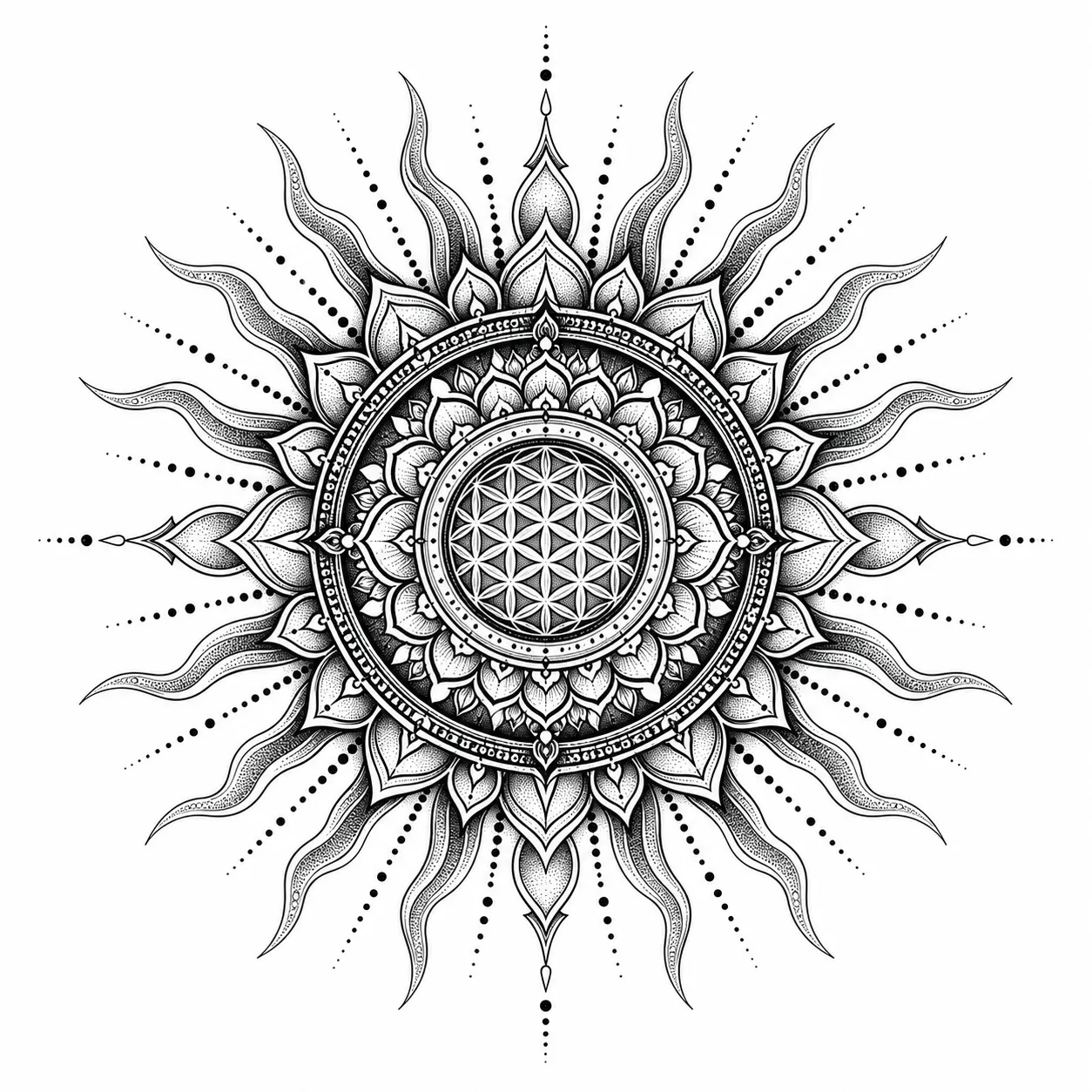
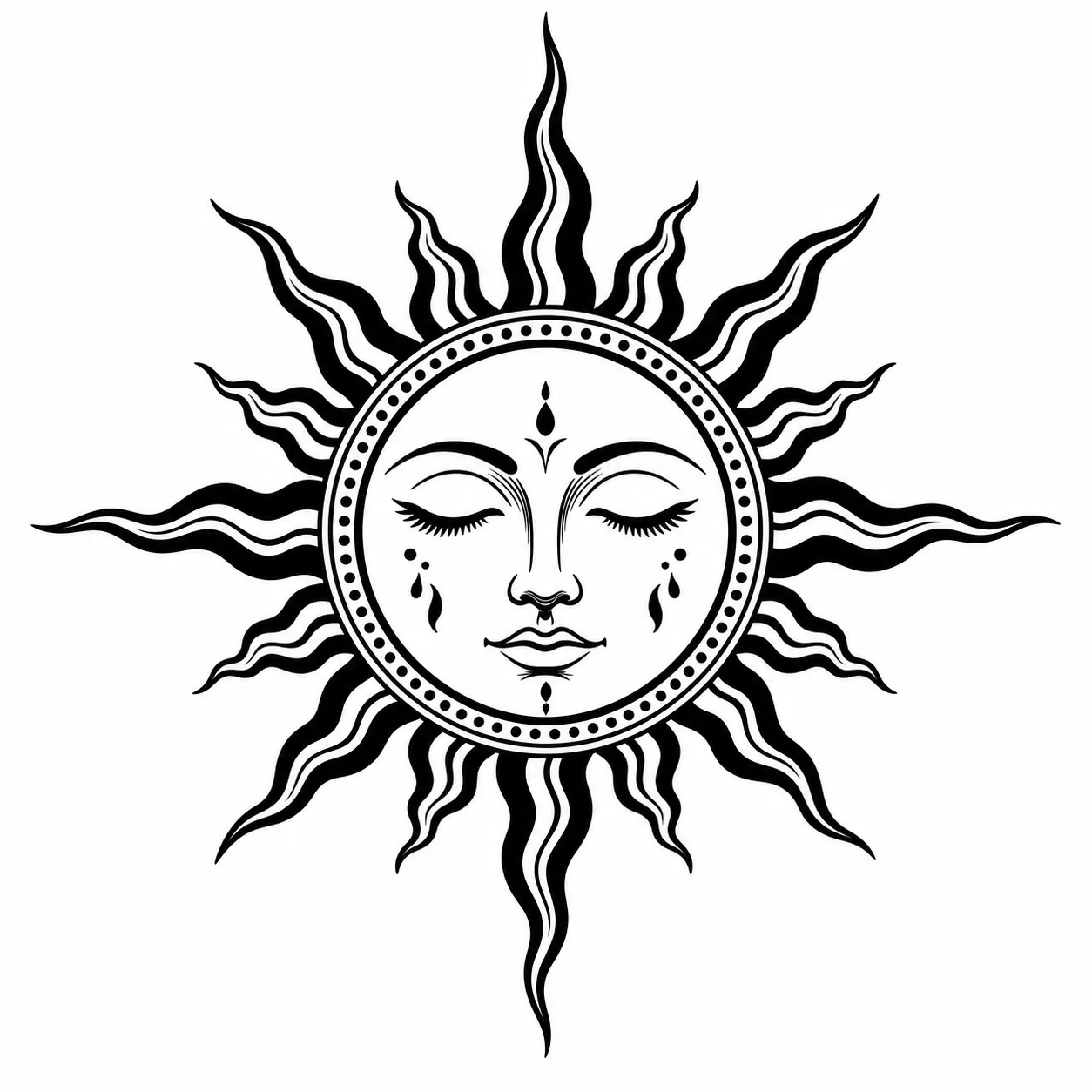
Create your own design
Describe your idea, pick a style – the AI creates one-of-a-kind tattoo designs in seconds.
Create your own tattoo
What does a sun tattoo mean?
Few designs are as old as the sun on skin. Long before tattoos became fashion, cultures from the Aztecs to the ancient Egyptians revered the sun as a source of life and order. That core still resonates today: a sun tattoo usually stands for energy, new beginnings, and the ability to rise again after dark stretches. Some wear it as a reminder of a turning point, others simply as a sign of optimism and joy. Depending on the execution, more layers come in – a black sun feels more serious and earthy, a radiant sun with a face more playful.
The sun as a design: from minimalist to mandala
The sun is as adaptable as almost any symbol. As a fine-line design, a simple circle with delicate rays is enough, barely bigger than a coin. In mandala style it becomes a densely patterned disk that quickly fills half a shoulder. In between lies the whole range: the Aztec sun disk with clean edges, the dreamy sun with half-closed eyes in a boho look, or the sun-and-moon combination for people who see both sides in themselves. What strikes me in consultations: many underestimate how much room fine rays need so they don't run together over the years. Better to ink it a bit larger than too cramped.
Which spot suits a sun?
Compact suns sit well on the forearm, wrist, or behind the ear, where they read as a small detail. Larger mandala or blackwork suns need a calm surface and come into their own on the shoulder blade, upper arm, or calf. Around the elbow or knee a sun looks spectacular but fades faster there, because the skin is always moving.
Fresh ink and sun: a tricky relationship
Of all designs, the sun gets along worst with actual sunlight – and that stays true long after the wound has healed. During healing, UV irritates the young skin and can wash out contours, so a fresh tattoo belongs firmly in the shade for the first weeks. The real long-term enemy, though, is the time after: sun slowly bleaches pigment over years, black lines turn grayish, colorful areas go dull. A sun that's meant to stay bold depends less on that initial rest period than on the habit of covering or applying sunscreen to the spot every time you're out in the sun. That routine is exactly what decides whether the design still looks like day one after five years.
How much does a sun tattoo hurt?
How much it stings comes down almost entirely to the spot, not the design. On the upper arm or shoulder blade it's manageable for most people; on the ribs, elbow, or foot it gets noticeably more intense.
FAQ
How long should you stay out of the sun after a tattoo?
As a rule, four to six weeks, until the top layer of skin has fully healed. As long as the spot is still red, peeling, or tight, it doesn't belong in direct sunlight. After that, consistent sun protection keeps the colors.
How do I protect a fresh tattoo from the sun?
The safest way is clothing that fully covers the spot. Only once the tattoo has healed does high-SPF sunscreen come into play – it doesn't belong on an open, fresh wound. In the first weeks it also helps to seek shade and avoid the midday sun.
Is the sun good for tattoos?
Not in the long run – it's the main reason tattoos fade. UV breaks down the pigment in the skin, so lines and colors wash out over the years. Regular sun protection is the best insurance for how the design ages.
What does a sun mean as a tattoo?
The sun stands above all for new beginnings, energy, and life force. Depending on the culture and design, meanings like protection, warmth, or a turning point you've come through can join in. A black sun is often read as more serious than a radiant one with a face.
Which style suits a sun tattoo?
That depends on the effect you want. Fine line suits delicate, small suns; blackwork or mandala suits filled-in designs; a watercolor-style sun gives a warm look. Clear, simple shapes stay the most readable over the years.