Flower Mandala Tattoo: Designs
A flower mandala tattoo blends the geometric symmetry of the mandala with the soft shapes of real blossoms into a calm, round whole. We'll go through the meaning, the styles that suit it, the best spots, and the pain question one at a time. That way you find a design that still looks clean years down the road.
You might also like:the lotus as a popular mandala motif · ornamental tattoos and their geometry · more tattoo designs at a glance
Templates & examples
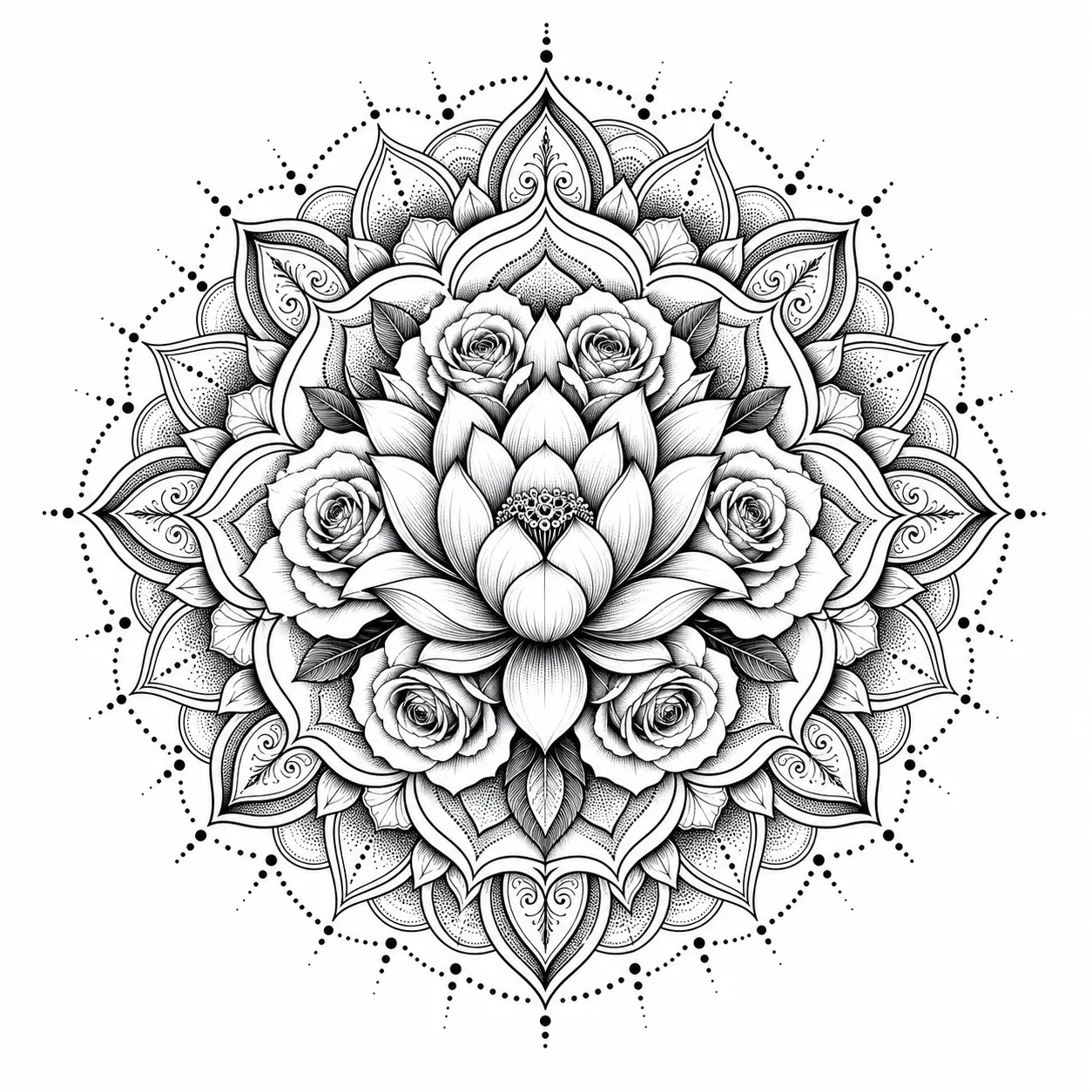
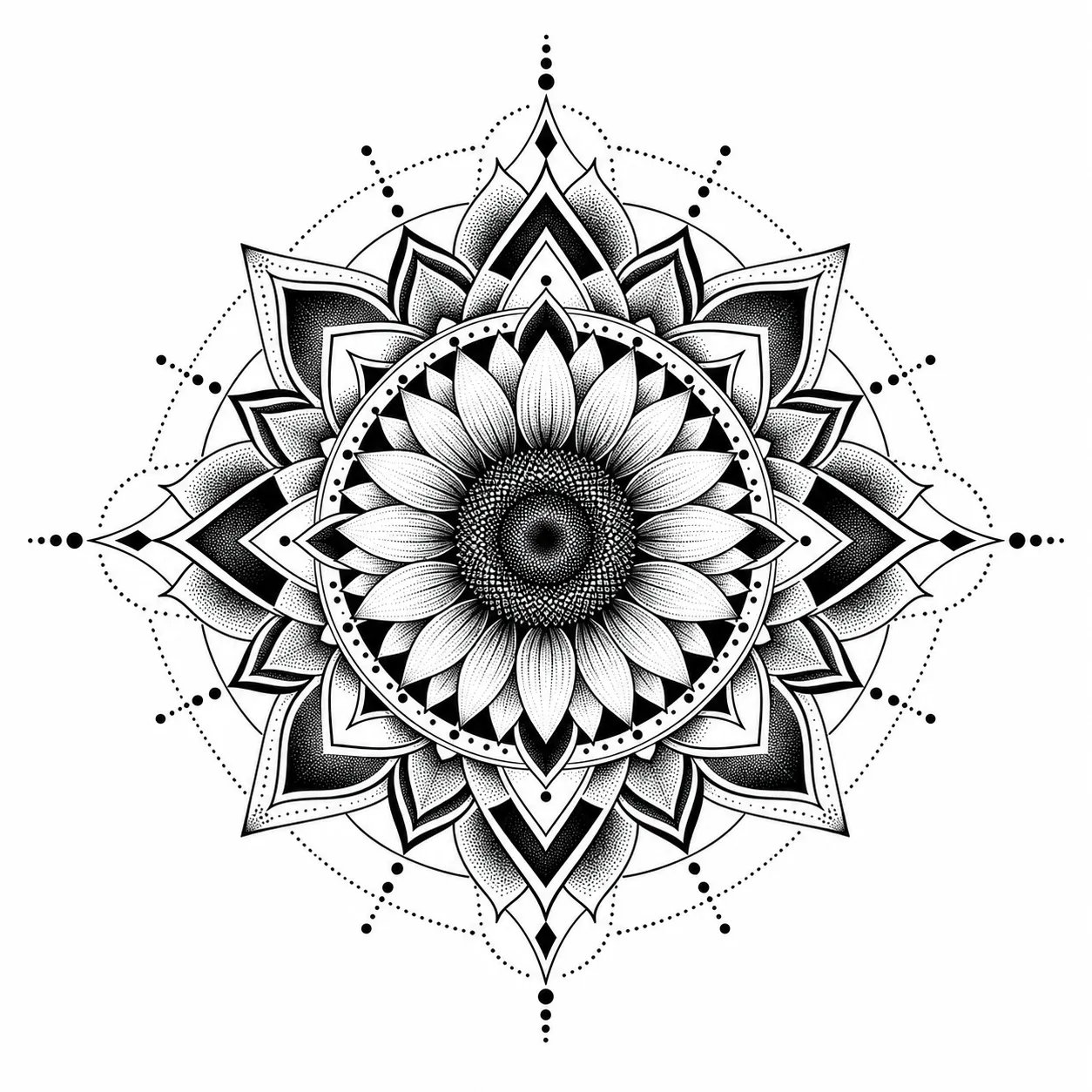
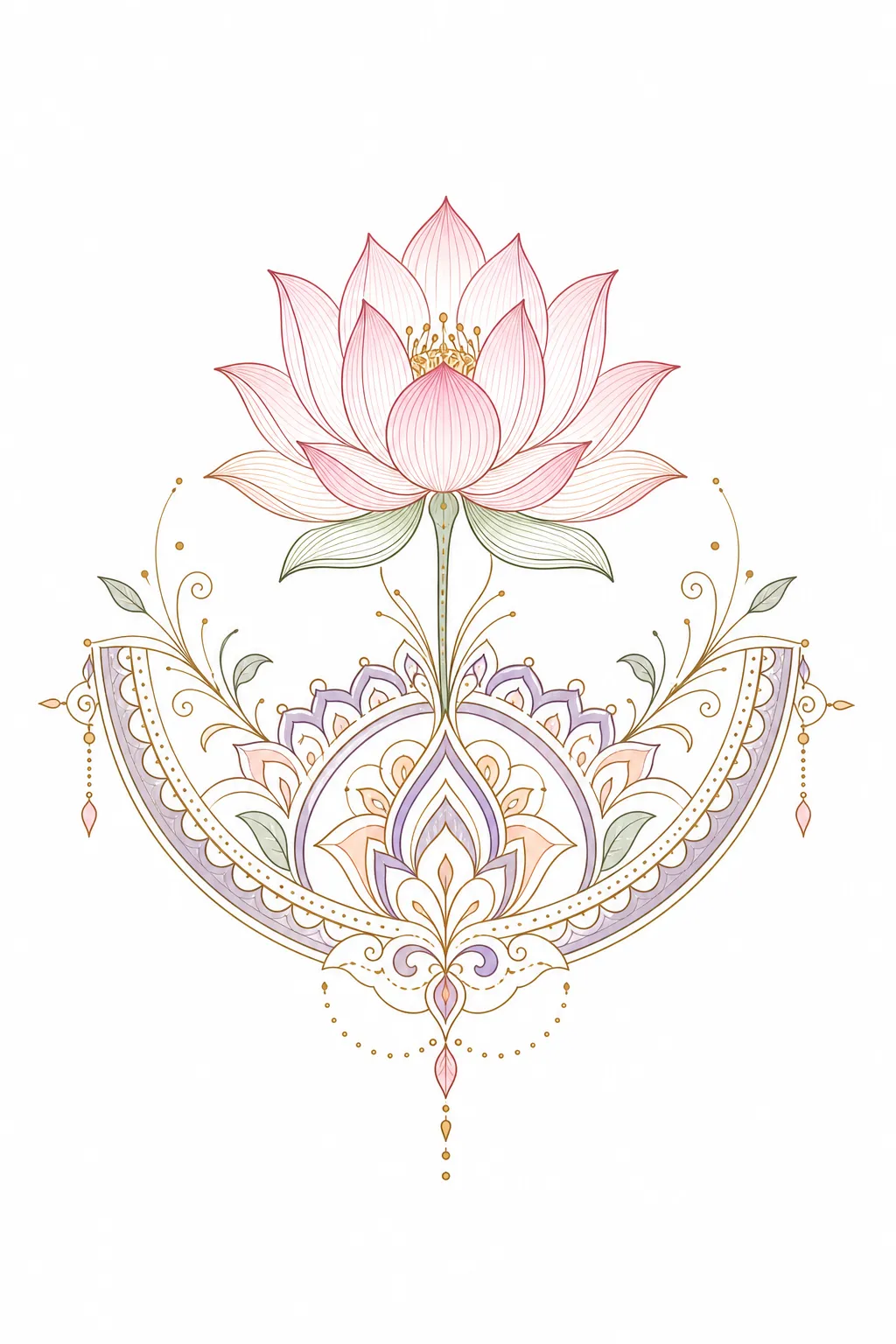
Create your own design
Describe your idea, pick a style – the AI creates one-of-a-kind tattoo designs in seconds.
Create your own tattoo
What is a flower mandala?
A mandala is a circular, symmetrical pattern that grows outward from a center point – originally from Hinduism and Buddhism, where it maps meditation and the order of the cosmos. In a flower mandala, real blossoms take on that role: petals, vines, and leaves arrange themselves in a radiating pattern around the center. Instead of purely geometric lines, the pattern carries botanical shapes, which makes it softer and more personal.
What a flower mandala tattoo means
The mandala stands for wholeness, balance, and a still center. The blossoms bring their own language: the lotus rises out of the mud into the light and reads as a sign of a new start, the rose for love, the peony for luck. Combining the two lays the mandala's inner balance over the specific message of a flower. In practice, most people choose a blossom that means something personal and use the mandala around it as a calm frame.
Which style suits a flower mandala tattoo?
Dotwork is the classic for this design: thousands of tiny dots build shading and depth and match the meditative structure of the mandala. Fine line uses thin, clean lines and looks delicate, but it demands clean symmetry, since any imperfection in a circle jumps out immediately. Blackwork with bold black holds up the longest visually. Color is possible, but most flower mandalas stay black and gray so the geometry sets the tone.
Where on the body?
A mandala lives on its round shape, so it sits best where the skin leaves room for a clean circle. Popular spots are the upper arm, thigh, upper back, and back of the hand. On curved spots like the shoulder, the pattern runs with the shape of the body. For a first mandala, a surface big enough is essential – cram too many details onto a few centimeters and the symmetry blurs over the years.
Pain, durability, and aftercare
Dense dotwork takes longer than a simple line, and the skin feels that time. On fleshy spots like the upper arm and thigh it stays manageable; over bone it gets more noticeable. After that, the usual applies: keep it clean, no sun early on, sunscreen later, so the fine dots stay readable for a long time.
FAQ
Are mandala tattoos still modern?
Yes, mandalas have been among the most in-demand designs for years and aren't fading. The dotwork version with blossoms in particular is very popular right now. Because the pattern relies on symmetry rather than trend colors, it doesn't look dated even after a long time.
What is a flower mandala?
A flower mandala is a circular, symmetrical pattern where blossoms and leaves take on the role of the geometric elements. Everything arranges itself in a radiating pattern around a center point. The result is a floral pattern with the calm structure of a classic mandala.
What does a flower tattoo stand for?
The meaning depends on the blossom: the rose stands for love, the lotus for a new start and inner calm, the sunflower for loyalty, the peony for luck. In a mandala, the idea of balance and wholeness joins in. The color shifts the message further.
Which tattoo stands for never giving up?
The lotus in a mandala works well here, because it fights its way up out of the mud. The surrounding mandala stands for finding your own center again after hard times. Many people add a short piece of lettering to the design.
How big should a flower mandala tattoo be?
Enough surface helps, because the fine dots and lines need room to stay clean. Palm-sized and up is a safe size on the upper arm or thigh. Very small mandalas lose their symmetry fast over the years.