Ornamental Tattoo: Patterns & Meaning
Ornamental tattoos translate jewelry into skin: delicate lines, arcs, and dots that follow the body's shape and run over the arm like fine adornment. Unlike a single motif, this is about the pattern itself. I'll walk you through the origins, the common forms, the placements that work, and what to watch for with pain and aftercare.
You might also like:more patterns for tattoos at a glance · flower mandala tattoo as a floral ornamental form · tattoo styles from fine line to blackwork
Templates & examples
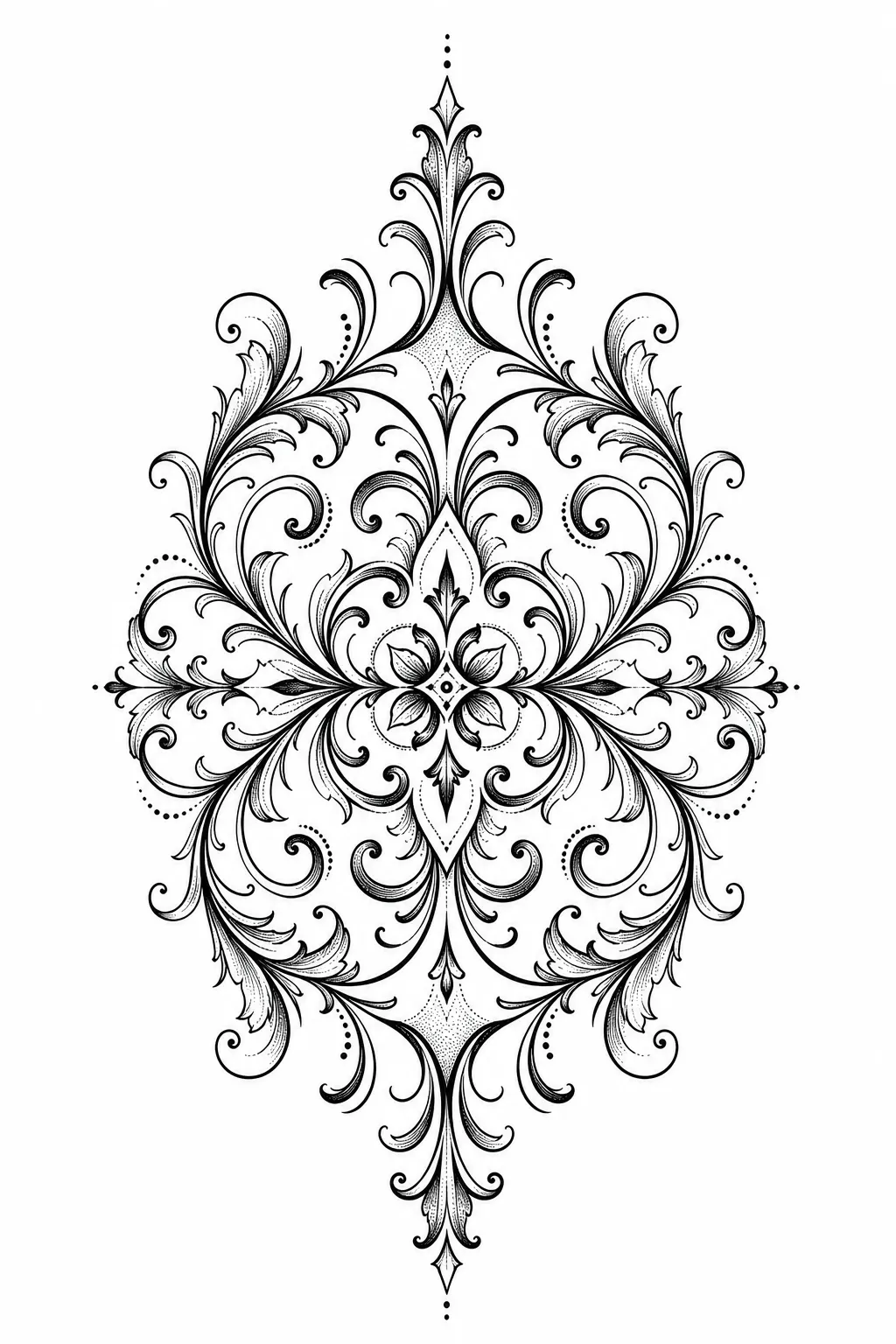
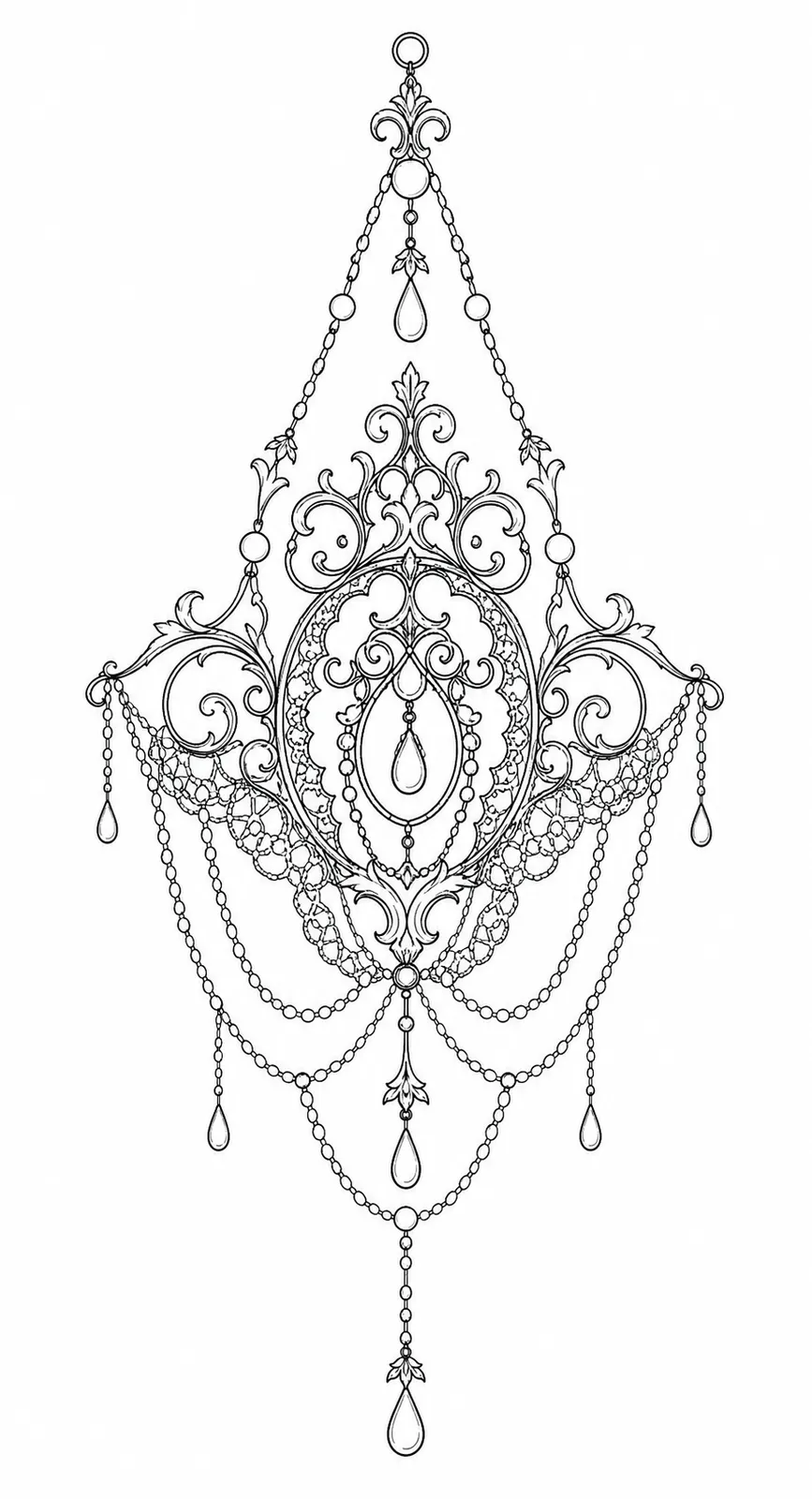
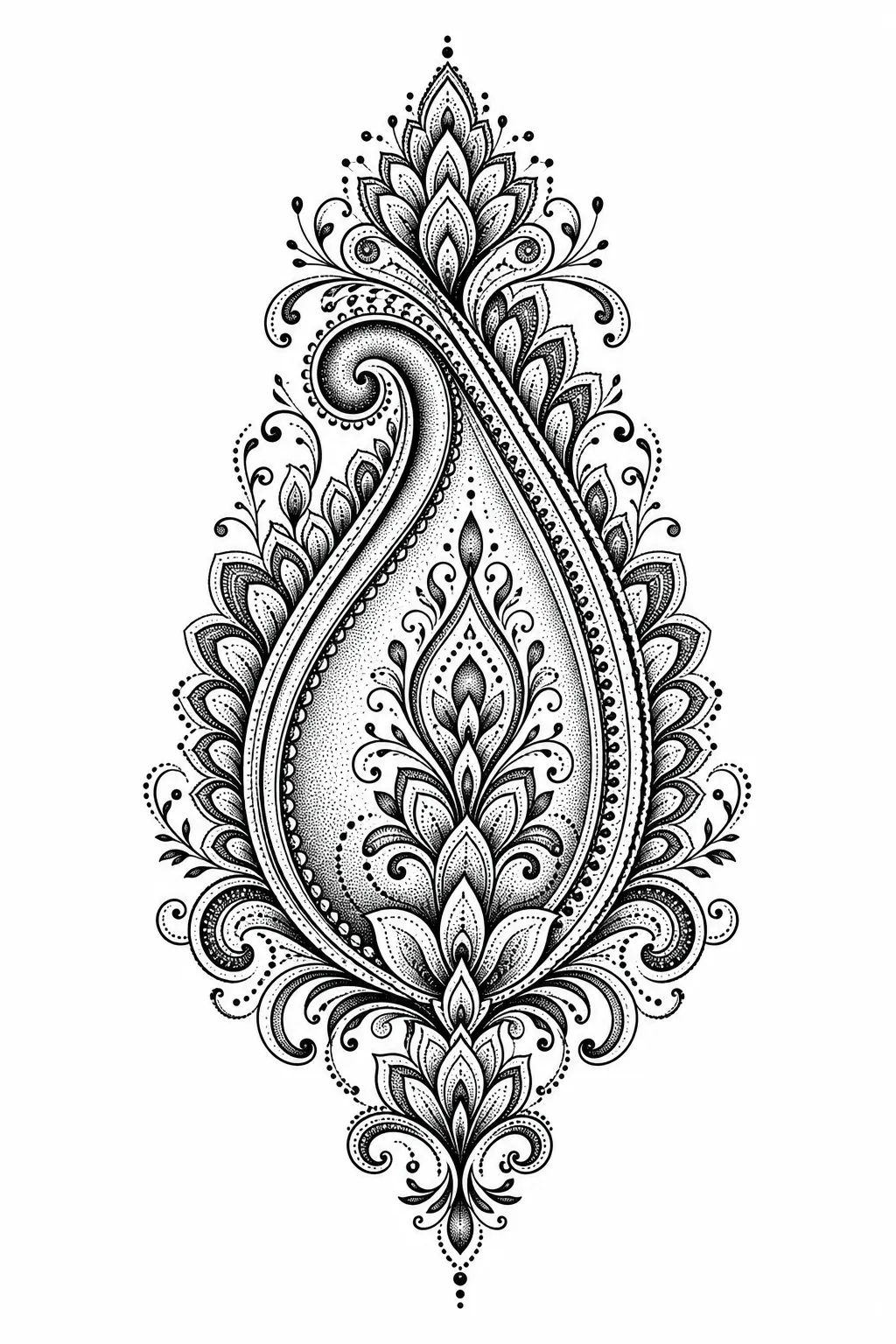
Create your own design
Describe your idea, pick a style – the AI creates one-of-a-kind tattoo designs in seconds.
Create your own tattoo
What are ornaments in a tattoo?
Ornaments are decorative patterns with no fixed picture: vines, lace arcs, rows of beads, geometric repeats. Their roots run from Indian mehndi to Baroque flourishes to Maori-inspired bands. The appeal is that they don't have to tell a fixed story; a lot of my readers choose them for exactly that reason, when a specific symbol would be too on the nose.
Which patterns define an ornamental tattoo?
You'll run into four families most often: mandala-like circles with rays fanning outward, delicate lace in the style of jewelry chains, geometric grids of triangles and lines, and lush Baroque vines. Blackwork leans on rich blocks, fine line on hair-thin outlines, and dotwork builds gray tones from thousands of dots. The style decides the effect more than the pattern itself.
Where does an ornamental tattoo look best?
Ornaments live on areas that give their symmetry room: the forearm, upper arm, spine, back of the hand, and sternum. On curved spots like the shoulder or hip, the pattern can wrap elegantly around the curve.
Does an ornamental tattoo hurt?
It depends a lot on the spot. Fleshy zones like the upper arm or calf are very manageable, while the back of the hand, ribs, and sternum pull noticeably more because of the thin skin over the bone. Large ornaments often take several sessions, and fine lines demand sitting still, since even a small twitch can throw off the symmetry.
Caring for an ornamental tattoo so the lines stay sharp
In practice, people most often underestimate how quickly tightly set lines run into each other over the years. Keep the fresh tattoo clean, lightly moisturized, and out of the sun for two weeks. After that, consistent sun protection is the most important thing: UV light is exactly what makes fine ornaments fade and wash out. Stick with that and you'll keep the sharp drawing for years.
FAQ
What are ornaments in a tattoo?
Ornaments are purely decorative patterns, vines, arcs, dots, geometric repeats, with no fixed picture. They follow the body's shape and read like laid-on jewelry. That very openness makes them flexible to combine.
What does an ornamental tattoo mean?
There's no fixed meaning. Depending on the source, ornaments stand for protection, balance, or connection, but often simply for aesthetics. The meaning usually comes from what you put into it yourself.
What do psychologists say about tattoos?
Research today sees tattoos as a normal form of self-expression, not as something conspicuous. Many people experience a tattoo as a way to make moments of their life visible. You can't draw sweeping conclusions about someone's character from it.
Which tattoos are trendy right now?
In demand are fine ornaments, fine-line patterns, and geometric dotwork, plus large-scale blackwork bands. The trend is moving away from the loud single motif toward patterns that emphasize the body's line.
How much does an ornamental tattoo cost?
Small ornaments usually start in the low three figures, while large bands over several sessions land much higher. What matters is the area, the level of detail, and the studio's hourly rate.