Flower of Life Tattoo: Meaning
The Flower of Life pulls a lot of people in as a tattoo because the pattern of overlapping circles feels calm and orderly, yet it still carries real symbolism. Here you'll get the meaning, the common design variations, the placements that work, and honest notes on pain and aftercare. At the end you can try your own version right in the generator.
You might also like:flower mandala tattoo with geometric patterns · spiritual tattoos and their symbols · tattoos and their meanings at a glance
Templates & examples
Create your own design
Describe your idea, pick a style – the AI creates one-of-a-kind tattoo designs in seconds.
Create your own tattoo
What the Flower of Life means
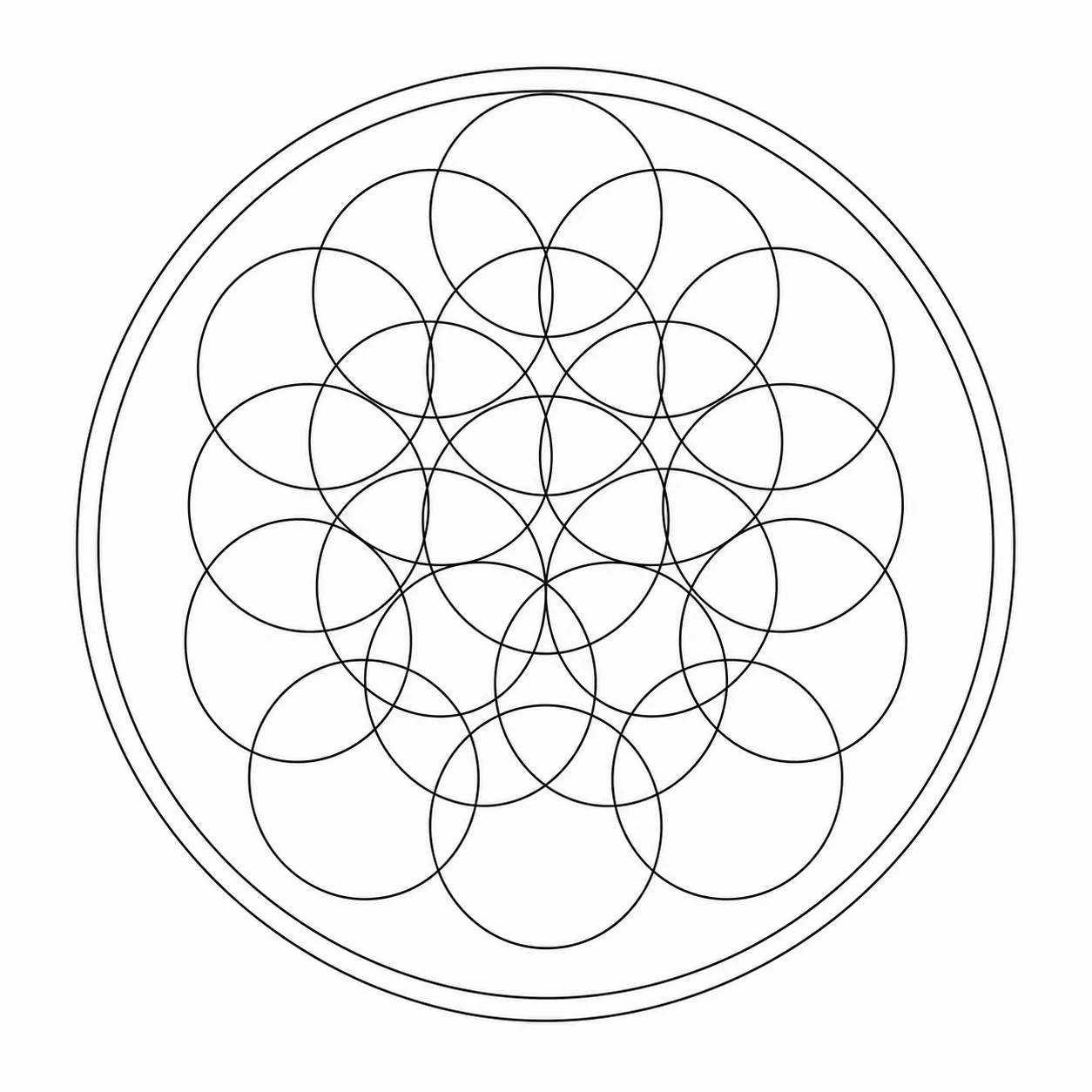
The symbol is built from several circles of the same size that overlap at regular intervals to form a flower-shaped grid. Across many cultures it's read as an image of creation, connection, and the cycle of all life, from the temple walls of ancient Egypt to modern spiritual readings. People who get it inked usually mean less a fixed message than a personal sense of order in the chaos.
From pattern to design: the common variations
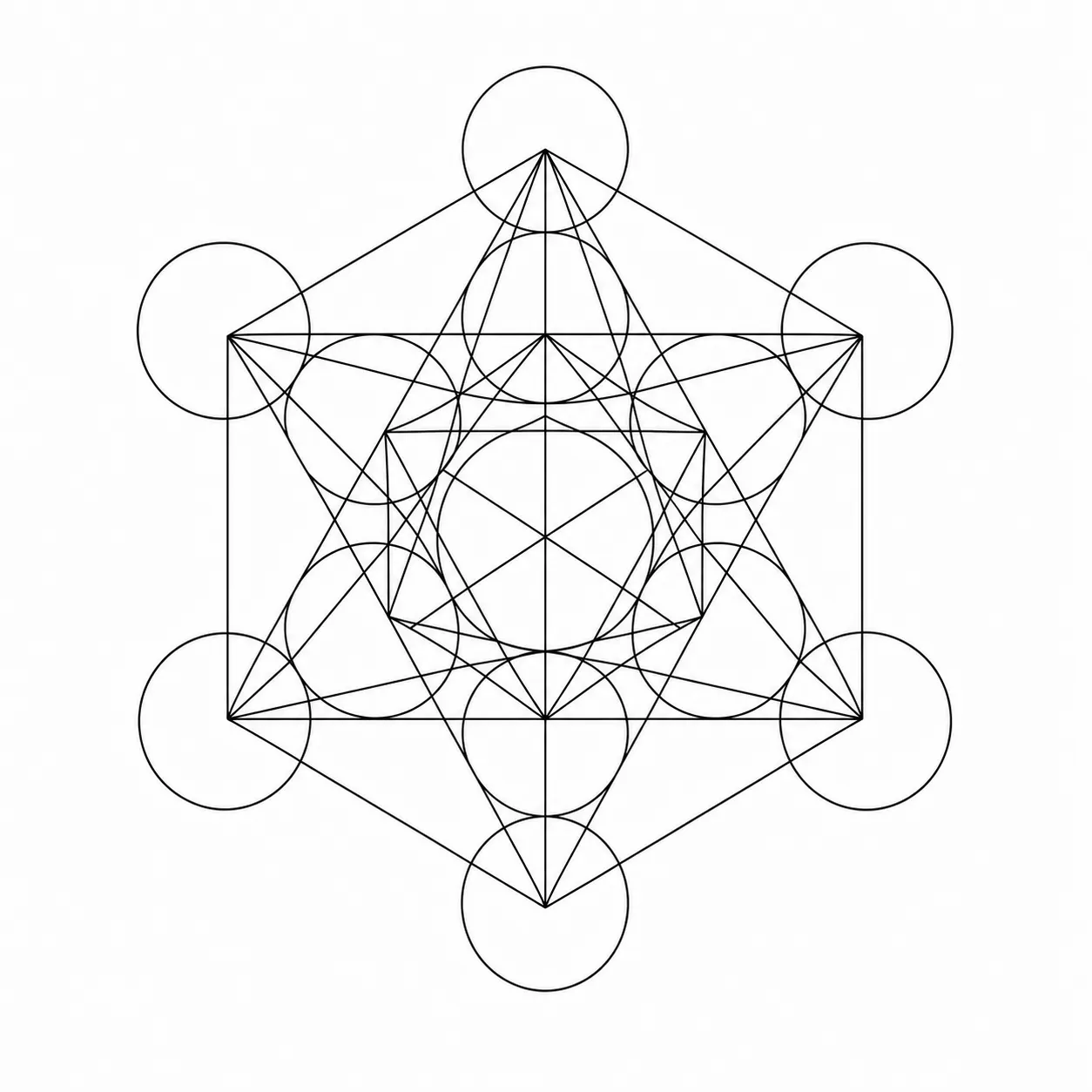
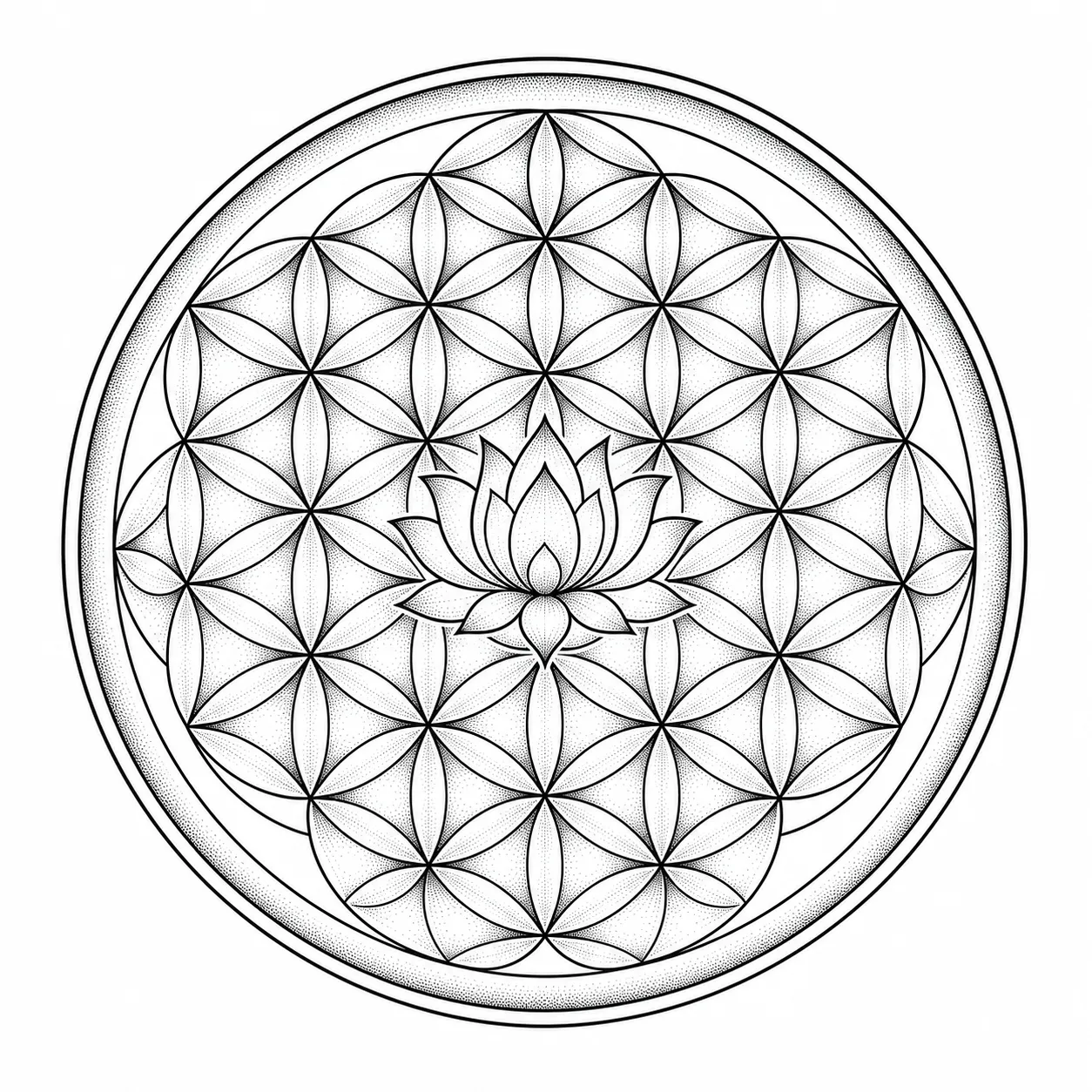
Most often the design runs as pure line work in black. Also popular are the version boxed inside a circle, a take with mandala elements, and combinations with a moon, lotus, or geometric shapes. Small fine line versions come out delicate, while large-scale back or upper-arm pieces feel almost architectural.
Which placement suits a Flower of Life tattoo?
Because the pattern lives on clean symmetry, it works best on flat, barely curved spots: forearm, upper arm, back, shoulder blade, or décolletage. In practice, the inner forearm is the most common choice, since the grid runs straight there and doesn't warp. On heavily curved areas like the biceps or calf the geometry tips out of shape fast, so talk it through with your studio first.
How much precision the fine grid demands
A clean Flower of Life tattoo stands or falls on precision. The circles have to be exactly the same size and meet at constant intervals, or every deviation jumps out at you. Good tattoo artists work with a stencil and compass construction here rather than freehand. On the forearm the pain usually stays manageable; over bone like the shin or the ribs it gets noticeably more uncomfortable.
Aftercare and longevity of geometric lines
Fine geometric lines don't forgive much. For the first two weeks the rule is simple: keep it clean, don't scratch, moisturize well, and stay out of the sun. Because thin lines fade or spread a little over the years, a slightly heavier stroke pays off if you want the design to stay sharp for decades.
FAQ
What does the Flower of Life tattoo mean?
As a tattoo, the Flower of Life usually stands for connection, creation, and the eternal cycle of life. Many people wear it as a quiet symbol of balance and of the idea that everything is linked. It carries no fixed religious meaning, so everyone reads it for themselves.
What does the correct Flower of Life look like?
The classic symbol is made of 19 full circles of equal size, arranged in a hexagon and enclosed by two rings. Every circle has the same radius and overlaps the others at regular intervals. If a studio strays from that, it's more a free interpretation than the geometrically correct form.
Where does the Flower of Life symbol come from?
The pattern shows up thousands of years ago, among other places on the walls of the Temple of Abydos in Egypt. Later it was picked up as sacred geometry in many cultures. The name Flower of Life, though, only came about in modern spiritual circles.
Which tattoo stands for never give up?
For perseverance, designs like the semicolon, an anchor, the phoenix, or lettering such as “never give up” fit better. The Flower of Life leans more toward calm and connection than struggle. If you want both, people like to pair the grid with a matching piece of lettering.
How big should a Flower of Life tattoo be?
So the fine circles don't bleed into each other, roughly eight to twelve centimeters is a good target. Smaller is possible with a very fine needle, but it fades faster. For lots of detail or mandala elements, palm-sized is perfectly fine.