Sleeve Tattoos for Women: Ideas and Planning
Updated
A rose vine can run in a narrow strip along your arm or wrap around it to form a sleeve. The two designs might look similar in a front-facing photo, but they create a different effect when you turn your arm. A sleeve can be airy, densely shaded or built up from individual motifs. Alongside the design, think about the back of your arm, the skin you want to leave visible and where you want the tattoo to end.
You might also like:Arm Tattoos for Women: Ideas and Placement · Fineline Tattoos: Planning a Fine-Line Design · Tattoo Designs: Ideas for Your Next Tattoo
Templates & examples
Create your own design
Describe your idea, pick a style – the AI creates one-of-a-kind tattoo designs in seconds.
Tools for your tattoo design
What sleeve length is right for you?
A half sleeve is a good choice if you want to start with one connected area, while a full sleeve runs from shoulder to wrist. A quarter or three-quarter sleeve gives you other options for where the design ends. These terms describe coverage rather than style: a floral design can work on either a half or a full sleeve. Think about where the tattoo will show in your everyday clothes. A design ending just above the elbow looks different from one that continues over the joint. On a forearm sleeve, the finish at the wrist is especially noticeable. You might let a vine taper away there or give the design a deliberate, defined edge.
| Length | Typical area | Design question |
|---|---|---|
| Quarter sleeve | Shoulder to upper arm | How will it end? |
| Half sleeve | Shoulder to elbow | Include the elbow? |
| Half sleeve | Elbow to wrist | How will the vine end? |
| Three-quarter sleeve | Shoulder to forearm | Where will it finish? |
| Full sleeve | Shoulder to wrist | How will the back look? |
How will the design look as you turn your arm?
A sleeve designed to wrap around your arm needs to work from the sides and back as well as from the front. Start by choosing where to place the focal point. A large flower on the outside can remain visible as you turn sideways, while smaller leaves lead towards the inside of the arm. Two large motifs on opposite sides will rarely be visible at the same time, which may be exactly the effect you want. A useful draft shows the arm from the front, back and both sides. Check how the views connect: a vine should not disappear behind the arm and reappear somewhere that feels out of place. Look at the arrangement with your arm relaxed and bent. This helps you see whether a face, flower or piece of lettering crosses an area that moves a lot.
Three floral sleeve ideas
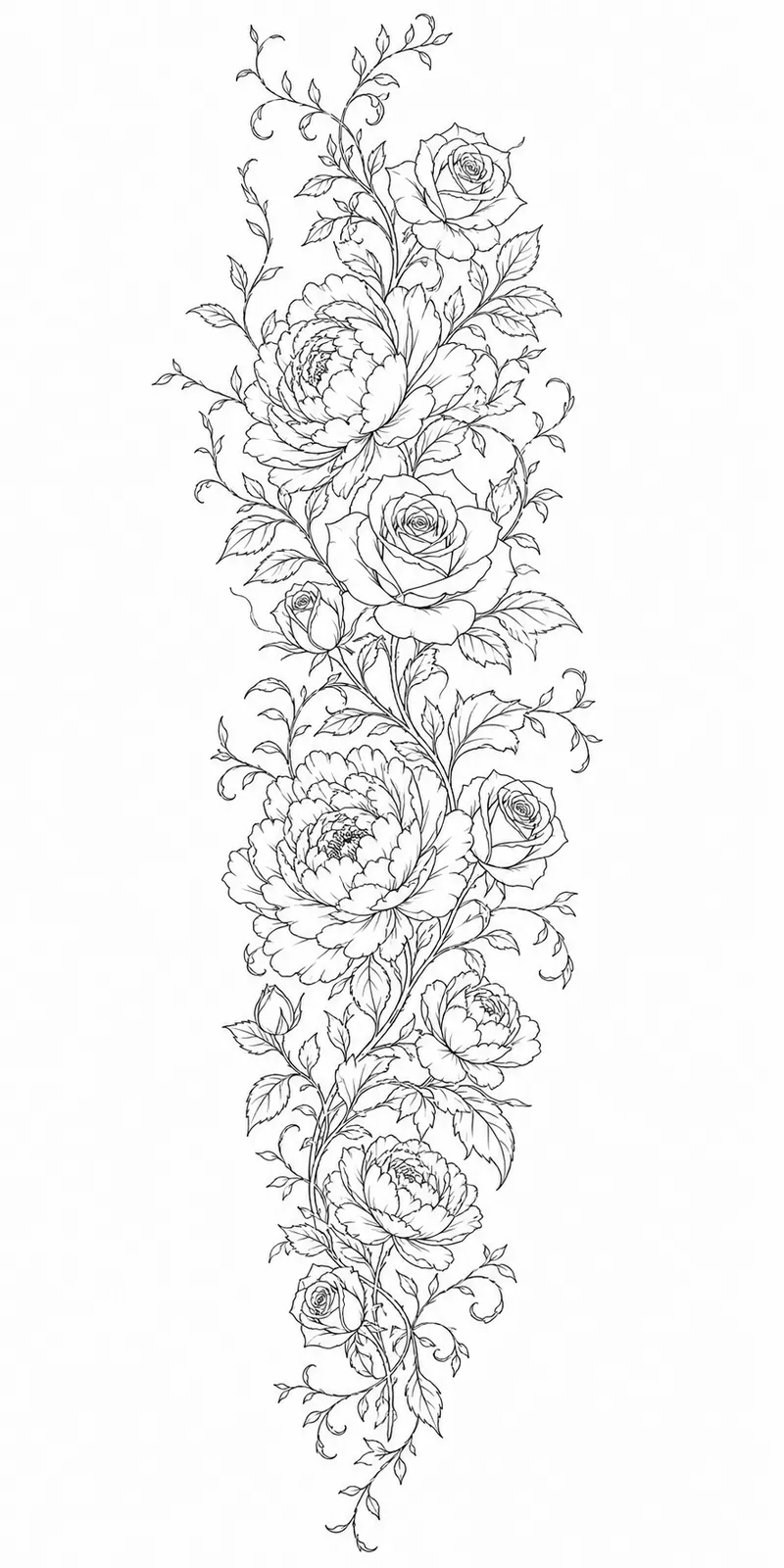
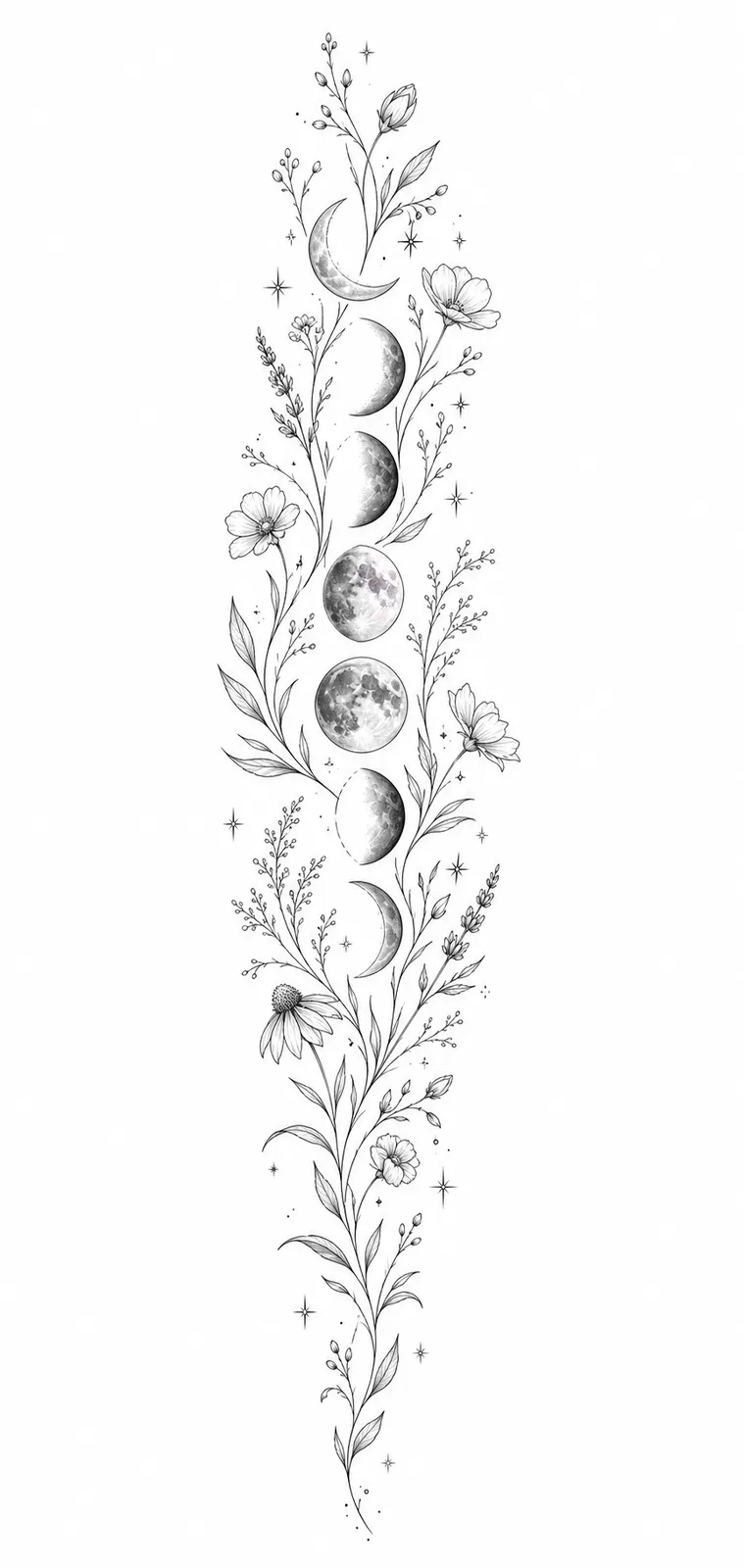
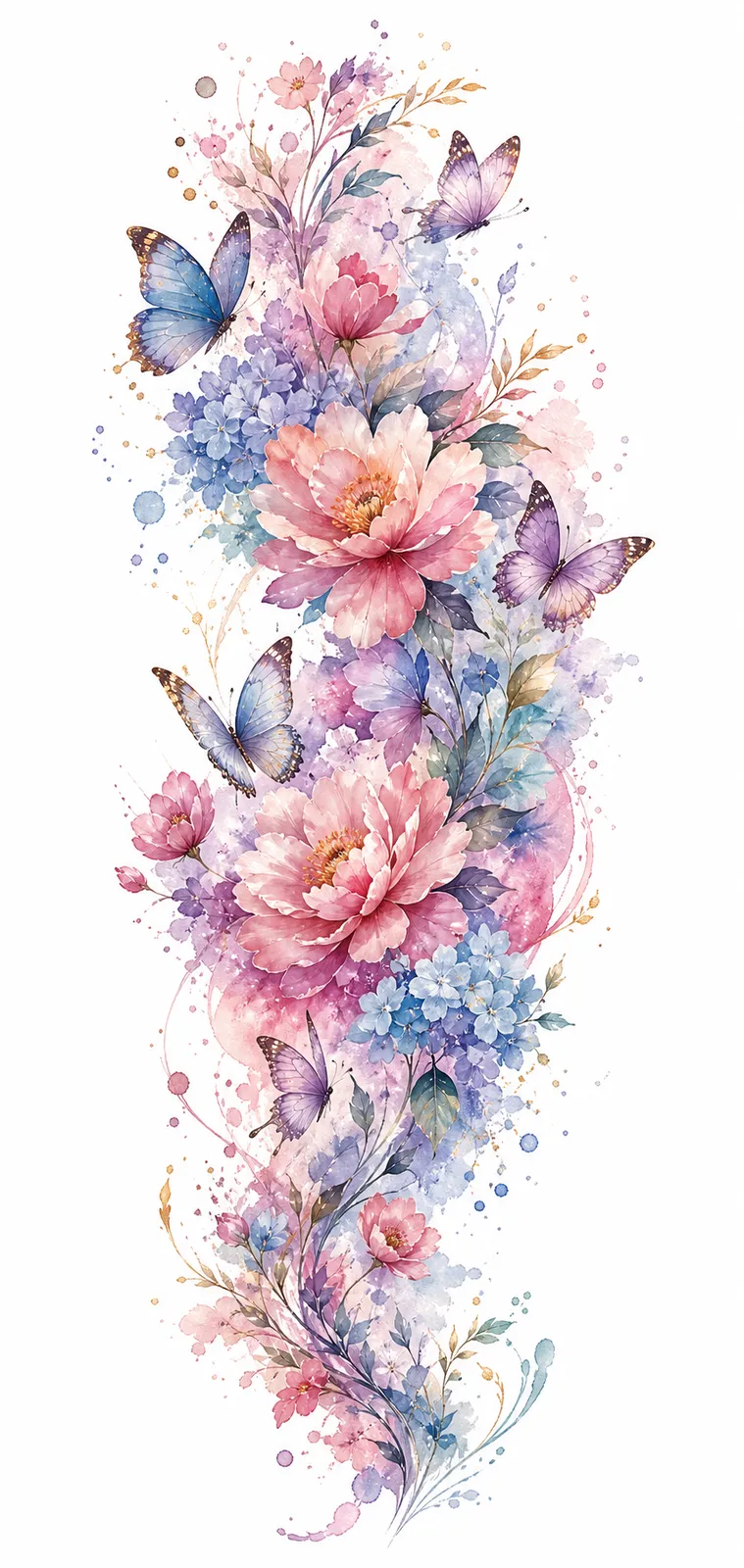
A trailing vine, a narrow celestial design and a colourful floral composition each follow the arm in a different way. In a black-and-grey rose design, lines and shading give the flowers their shape. Larger blooms leave room for recognisable leaves, while fine branches can connect the spaces between them. Moon phases can follow a quiet axis, such as the outside of the forearm. For a colourful peony, consider how colour is distributed across the whole arm. Concentrating it in one place creates a strong focal point; repeating small accents elsewhere can make the design feel more connected. Leave enough space between butterflies and petals for the wings to remain readable as separate shapes.
These three designs were created with the Inkspira AI tattoo generator.
Plan for open skin and existing tattoos
Areas of visible skin can help a sleeve feel cohesive when their shapes are planned as part of the design. In a floral vine, those spaces might sit between leaves and flowers. If every gap is equally narrow, a large piece can look busy from a distance. Larger open areas beside densely shaded sections give individual motifs room to stand out. If you already have an arm tattoo, mark its approximate position and size on the overall plan. A dark existing piece can remain a focal point; new leaves or ornaments do not have to surround it completely. If you want it covered, discuss that before choosing the new design. The old tattoo’s colour, contrast and size limit the options, and a very light, delicate flower will generally not reliably conceal a dark area.
Fine lines, colour and readable details
Fine lines give a sleeve a light appearance, but small details need enough space to remain recognisable over time. Instead of crowding tiny leaves together, consider making individual leaves larger and leaving skin visible between them. The key outlines of a moon phase or butterfly should also have enough room to avoid merging with neighbouring lines. Black-and-grey work creates depth through variations in shading. Watercolour-style colour has a softer appearance, but without recognisable shapes its edges can look less defined. Ask to see healed work in your preferred style and discuss which details make sense at the size you have in mind. A digital draft can help you compare ideas; the final size and linework will be adapted to your arm.
What do sessions cost, and how should you plan for healing?
In Germany, a half sleeve costs roughly €1,500–€3,000 and a full sleeve around €3,000–€6,000 or more. These are estimates: dense shading, colour and intricate details can add to the work involved. Before you begin, ask whether the studio charges by the hour or by the session and what the estimated total includes. A sleeve usually takes several appointments. The tattooed skin needs time to heal between them, so agree on the intervals with your studio according to how healing progresses. Skin around the elbow and inner elbow moves constantly. Choose clothing that does not rub tightly against it and follow the studio’s aftercare instructions. Seek medical advice if redness increases, pain is severe or you notice other signs of infection.
FAQ
How much does a sleeve tattoo cost for women?
A half sleeve costs roughly €1,500–€3,000, while a full sleeve is around €3,000–€6,000 or more. Coverage, style and working time determine the actual price. An estimate for the whole project can help you budget for later sessions.
Can I build a sleeve tattoo gradually?
Yes, a sleeve can be completed over several appointments or built up gradually from individual motifs. A rough plan for the whole arm helps you leave room for additions and sensible spacing. You do not need to decide on every leaf in advance.
Does a sleeve tattoo hurt?
A sleeve can be painful, particularly around sensitive areas such as the elbow and inner elbow. The outside of the arm is often considered less sensitive. Discuss breaks before your appointment and, if needed, spread larger areas across several sessions.
How long does a sleeve tattoo take?
A full sleeve takes several sessions and can extend over many months, including healing time. The number of appointments depends partly on the size, style and level of detail. Appointment intervals and healing also affect the schedule.
Does a sleeve have to cover the whole arm?
No, a half sleeve covers only part of the arm. You can also leave areas of skin visible within a planned sleeve. Decide whether you want a design that wraps all the way around or one with a more open flow.