Sleeve Tattoos for Men
A sleeve tattoo covers a large part of the arm and makes an especially strong impression as a thought-through whole. Instead of separate motifs, you get one connected world of imagery that tells a story from wrist to shoulder. Popular with men are nature themes, geometric patterns, Norse and mythological motifs, and realistic portraits. A sleeve rarely happens in a single day. It grows over several sessions into a cohesive whole. Browse designs below, or use the AI generator to develop a first idea for your own sleeve concept in seconds.
You might also like:sleeve ideas for women · delicate fine line motifs · small tattoos for men
Templates & examples
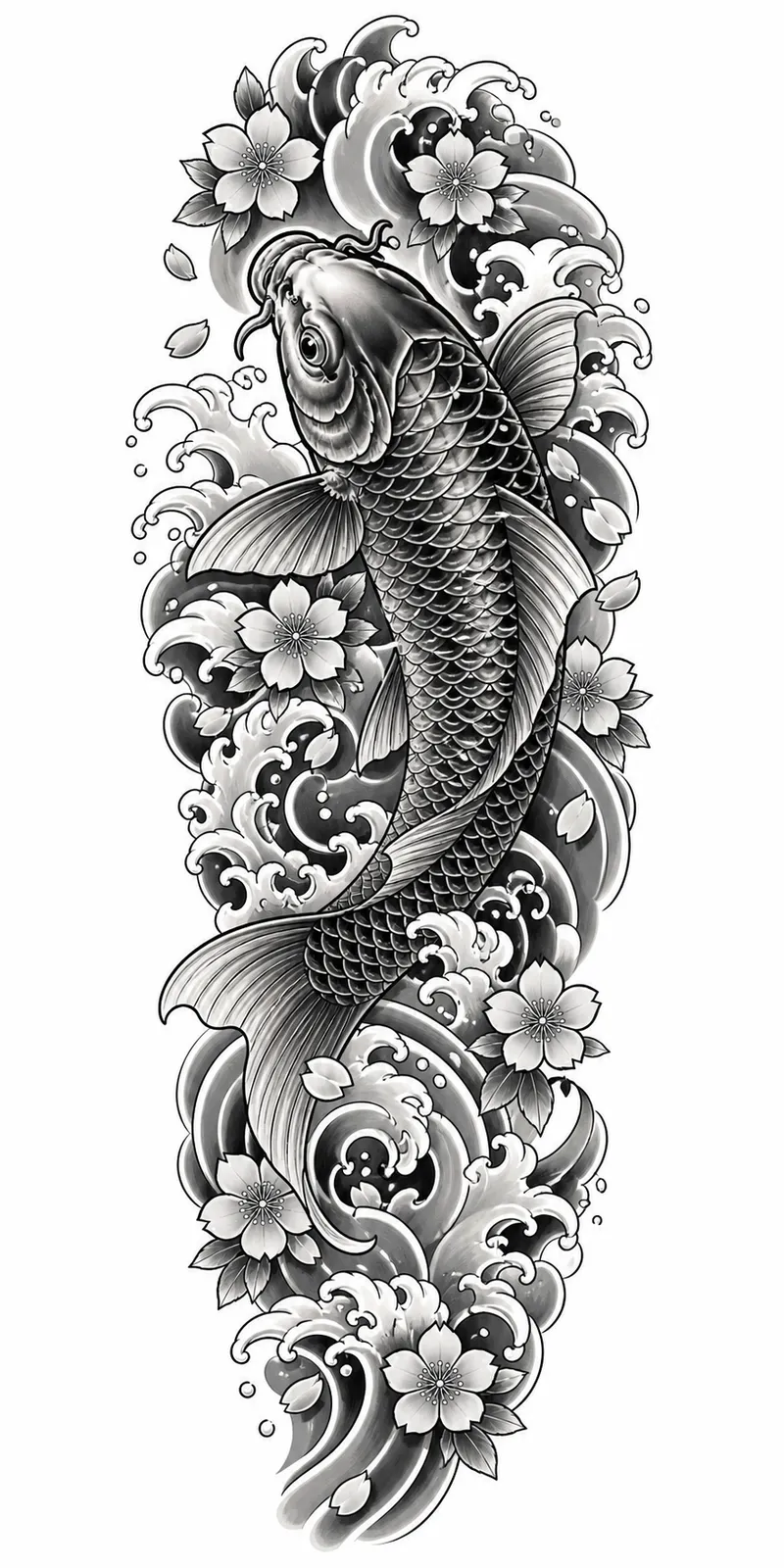
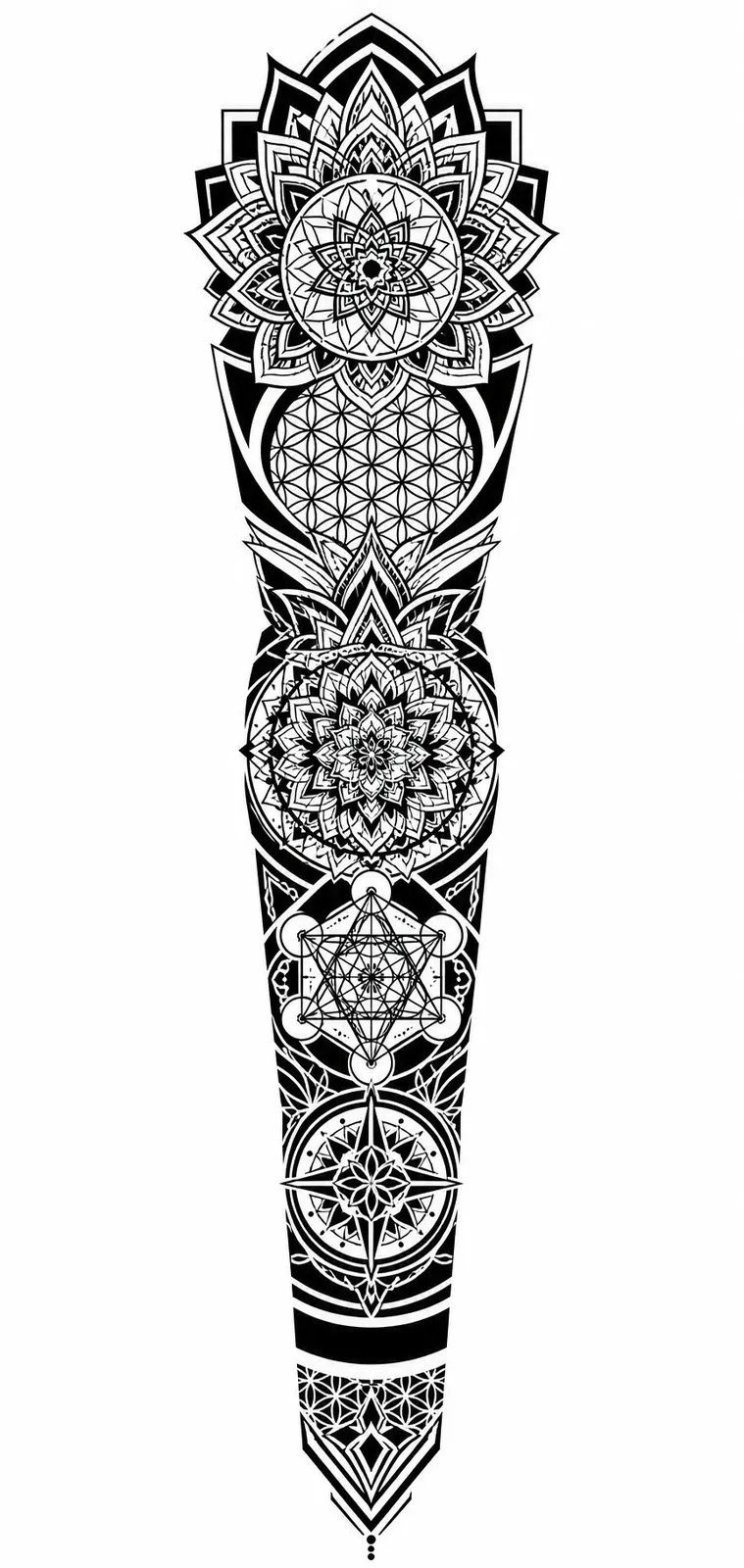
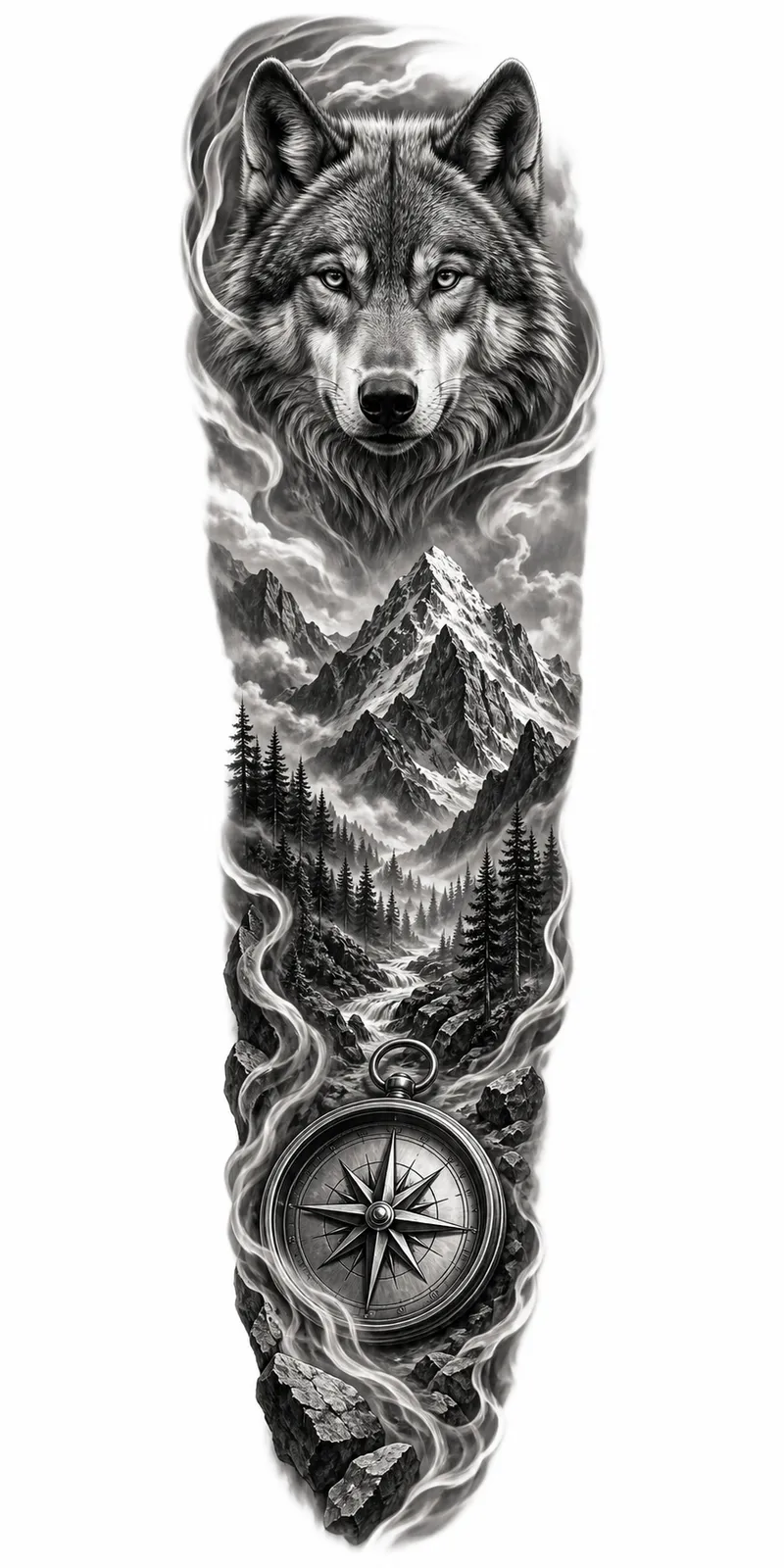
Create your own design
Describe your idea, pick a style – the AI creates one-of-a-kind tattoo designs in seconds.
Create your own tattoo
Half Sleeve or Full Sleeve?
A half sleeve usually runs from the shoulder to the elbow or from the elbow to the wrist and is a good way into larger areas. A full sleeve covers the entire arm and offers room for a continuous story, but demands considerably more time and budget. Many start with a half sleeve and expand it later. What matters is thinking the layout through generously from the start, so individual elements can connect harmoniously and no awkward gaps open up as the arm keeps growing.
Effort, Sessions, and Cost
A sleeve is a project spanning weeks to months. Depending on size, level of detail, and style, several sessions are needed, with the skin healing in between. It's usually billed by the hour or as a day rate, so a full arm is a noticeable investment. Exact figures depend heavily on region, studio, and motif, and a binding quote only comes after the consultation. Deliberately set aside time. A high-quality sleeve comes together in stages, not under time pressure.
Popular Themes and Styles for Men
Common picks are nature motifs like forests, mountains, waves, or animals, along with geometric and mandala-like patterns that wrap nicely around the arm. Norse and mythological themes, clocks, a compass, or realistic portraits are widespread too. Stylistically the range runs from bold blackwork through fine shading to realism. What's crucial is a common thread: a sleeve works best when the motifs, style, and flow all fit together rather than being a set of disconnected single images. A solid rough concept before the first session pays off.
Planning a Cohesive Concept
A convincing sleeve tattoo starts with a clear idea of how the parts play together. Think through the theme, the main motifs, and how the eye moves before any details are locked in. Elements like background, transitions, and open space make the arm read as a unit. Collect references you like and bring them into the studio. Many artists develop an individual design from them. The clearer your vision, the easier the shared planning, and the more cohesively each session later fits into the overall picture.
Pain and Healing With a Sleeve
Pain varies across the arm: the outsides of the upper and lower arm are usually easy to tolerate, while the elbow, inner arm, and the area near the armpit are more sensitive. Since a sleeve comes together in stages, the strain spreads across several appointments. Between sessions, each area needs its healing time, during which sun, sauna, and heavy friction are off-limits. Consistent aftercare and patience are key so the colors and lines end up looking even and clean across the whole arm.
FAQ
What does a sleeve tattoo cost?
A sleeve is usually billed by the hour or as a day rate and adds up over several sessions into a larger investment. Exactly how much depends on size, level of detail, style, and region. The studio can only give you a reliable price after a personal consultation about your motif.
How many sessions does a sleeve take?
That varies a lot with scope and level of detail. A half sleeve often takes just a few sessions, while a full sleeve can require several to many appointments over months. The skin has to heal between sessions, which is why a full arm can't sensibly be done in one go.
Does a sleeve tattoo hurt?
The pain varies by spot: the outsides of the upper and lower arm are usually easy to take, while the elbow, inner arm, and armpit area are noticeably more sensitive. Since a sleeve comes together over several appointments, the strain is spread out. Sensation is individual and also depends on your form on the day and session length.
Should I start with a half sleeve?
For many, a half sleeve is a good way in: more manageable in time and budget, and expandable to a full sleeve later. What matters is thinking through the overall layout from the start so later additions connect harmoniously. Talk this option through openly with your artist at the consultation.
How do I plan a cohesive sleeve motif?
Start with a clear theme and the main motifs rather than collecting separate images. Pay attention to how the eye moves, the transitions, and open space so the arm reads as a unit. Bring references into the studio, and from them an individual design emerges that holds the style and flow together across the whole arm.