Barbed Wire Tattoos: Meaning, Designs and Placement
Updated
A 20 cm barbed wire band can look straight on paper but meet unevenly when wrapped around your arm. Plan how the design will follow your skin as carefully as the motif itself. Barbed wire can evoke a 1990s look, while a rose, a heart or an open length of wire gives it a different character. Think about the size, the placement and whether you want the ends to meet before taking a reference to your tattoo appointment.
You might also like:Tattoo Ideas: Finding a Design That Fits · Tattoo Designs: Ideas for Your Next Tattoo · Design Your Own Tattoo
Templates & examples
Create your own design
Describe your idea, pick a style – the AI creates one-of-a-kind tattoo designs in seconds.
Tools for your tattoo design
What does a barbed wire tattoo mean?
Barbed wire can represent a boundary, protection or a difficult time someone has overcome. Its purpose as an object is to keep something out or hold something in, and that tension can give the image meaning. Broken wire might suggest a way out, while a closed band can suggest a boundary. Some people choose it simply for its graphic appearance or as a reference to 1990s style. Barbed wire is also associated with prisons and captivity, but a tattoo cannot reliably tell you anything about the wearer’s life. The idea that each barb represents a year in prison is not a universal code. If you would rather avoid that association, adding a flower or leaving the wire open instead of wrapping it tightly around a limb can change the way the design reads.
How do you make a band meet around the arm?
A band that goes all the way around needs a planned join at the back of the arm. Measure the circumference where you want it to sit, then decide which part should be visible when your arm hangs naturally. If your arm measures 28 cm around, for example, the design needs to reach that full distance along the skin. The visible front alone will not tell you whether the ends will meet. The height and spacing of the barbs also need to work at the join. Otherwise, the final section may look cramped or a barb may land directly on the seam. Have the placement checked with your arm relaxed and your elbow bent: a line can look different on a curved, moving surface than it does on paper. An open band with two visible ends is an alternative.
How much room do the details need?
A clear design needs space between the lines and enough room for the barbs. In a very small piece, crossings and points can start to look crowded. A simple length of wire around 5–8 cm long is one possible starting point. A heart with a lock or a rose can be larger so that the smaller shapes remain recognisable. Look at the tightest part of the design as well as its overall size. Where two strands cross, there should be visible skin between them. Fewer barbs or a single strand instead of a twisted double strand can help. Fine lines give a lighter effect; stronger black outlines make a more pronounced mark. Discuss the linework with your artist at the appointment, using the design to decide what suits your skin and the intended size.
| Design | Possible size | Placement | What to check |
|---|---|---|---|
| Single length of wire | 5–8 cm long | Forearm | Spacing between barbs |
| Wraparound band | Based on circumference | Upper arm | Join at the back |
| Wire with rose | 10–15 cm high | Thigh | Separation of petals and wire |
| Heart with lock | 8–12 cm high | Forearm | A recognisable lock |
Three designs: a ring, a rose and a heart
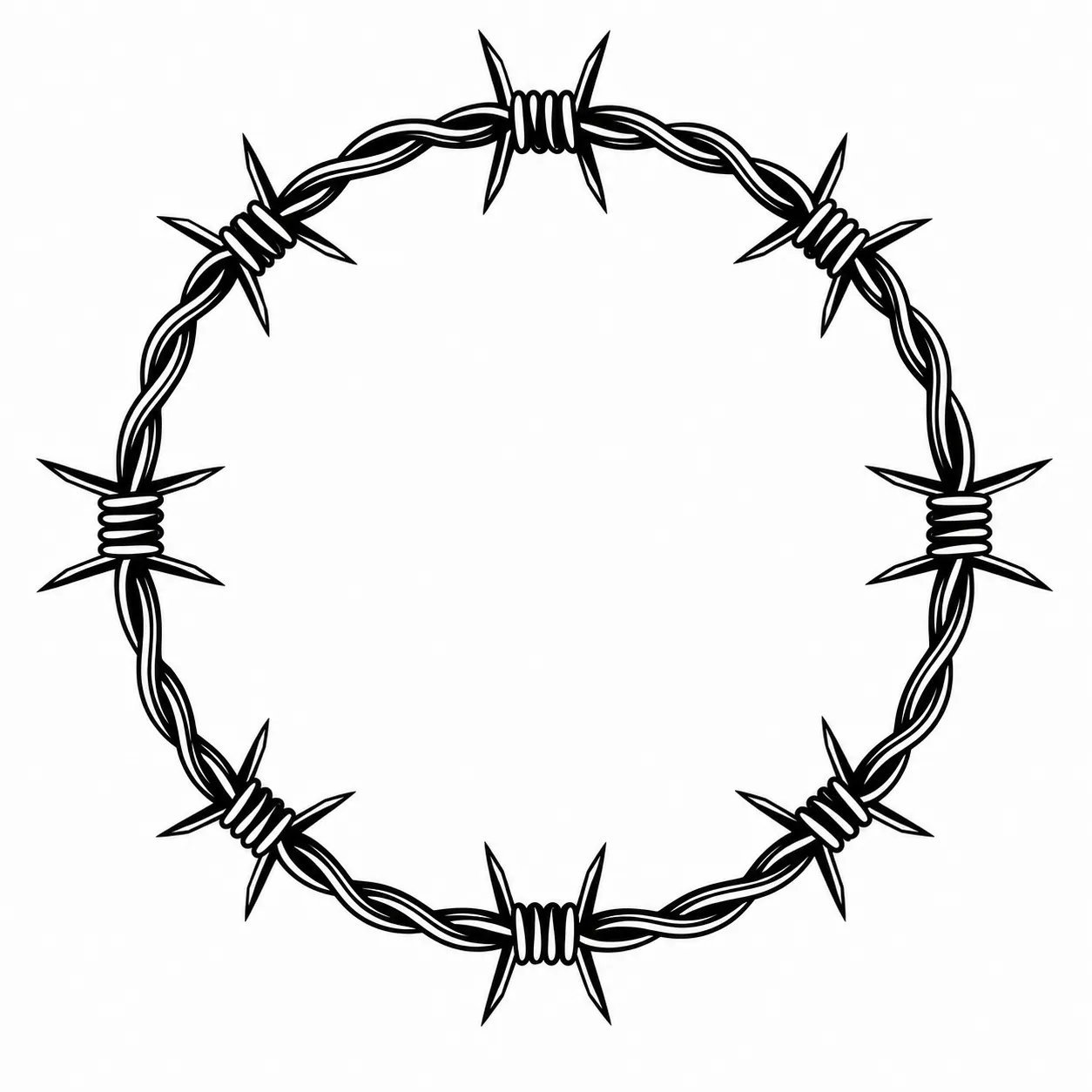
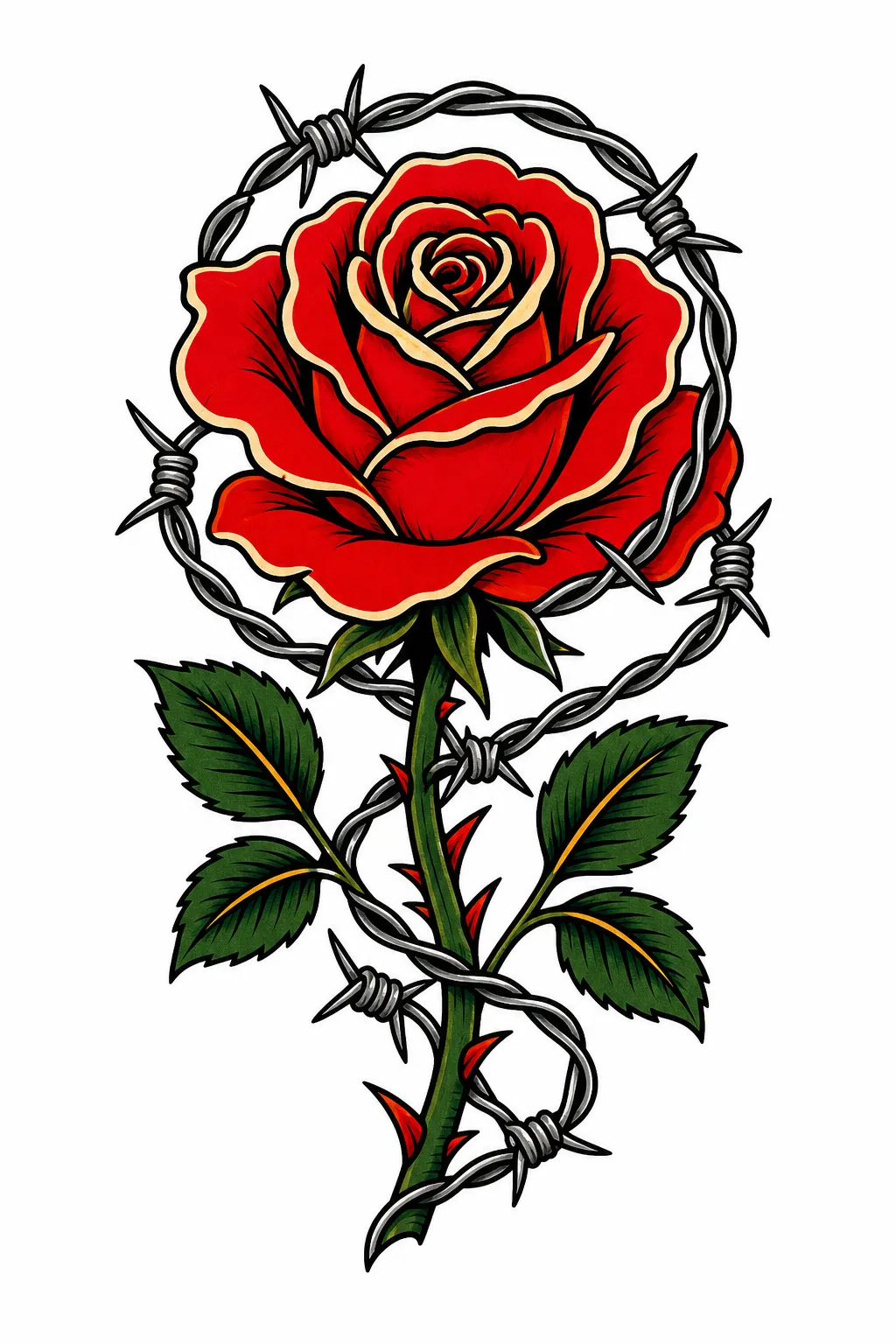
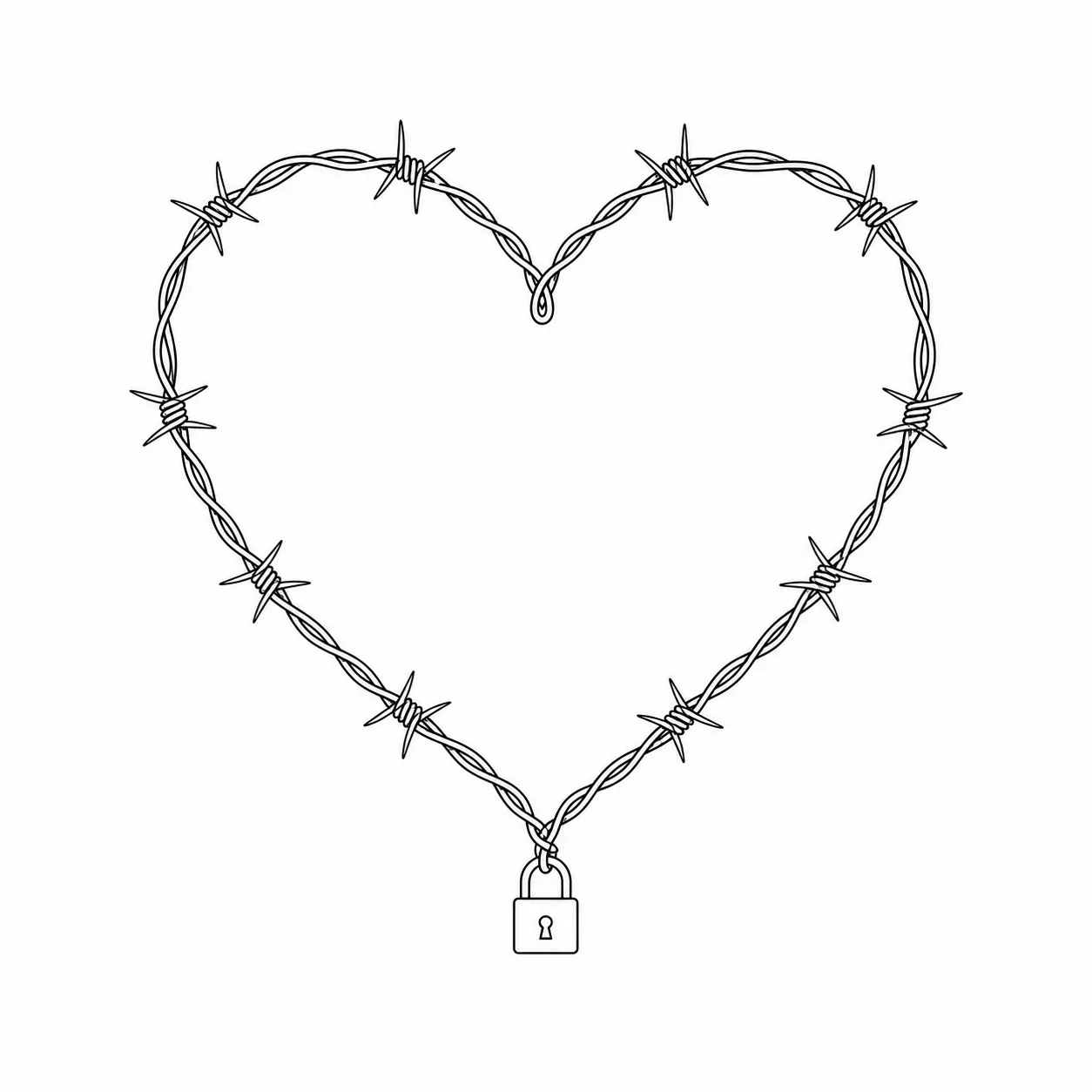
A ring, a rose and a heart each give the wire a different role: it can form the whole design or wrap around another element. A closed wire ring has a compact, graphic look. Unlike an armband, it does not have to wrap around a body part, so choose a spot where its circular shape can be seen clearly from one direction. In the rose design, coloured petals sit alongside dark wire. Keeping the wire from covering every petal outline helps both elements remain clear. The heart and lock have a quieter appearance, but the small lock still needs enough space. For a combination design, decide which element you want someone to notice first from a distance. That can guide the balance of outlines, colour and size.
These three designs were created with the Inkspira AI tattoo generator.
Where should you place the wire?
The upper arm and forearm are natural places for a band, while the thigh can work well for a single design. A complete band on the upper arm can be hidden under a sleeve; one at the wrist is more often visible. Lines change shape more when a joint bends. Placing the design slightly away from the joint can make its shape easier to judge when the body is at rest. In Germany, a simple small wire design or a basic band may cost roughly €100–€250. A larger coloured rose with several details may cost around €250–€500. Size, linework and the studio’s minimum price all affect the quote; a wide band is not necessarily inexpensive just because it consists of lines. Bring your preferred placement, approximate size and line weight to the appointment so the drawing can be adjusted to your body before it is transferred.
FAQ
What does a barbed wire tattoo stand for?
It can stand for protection, boundaries or a difficult time someone has overcome. Some people choose it as a decorative design or for its connection to 1990s style.
Does a barbed wire tattoo mean someone has been in prison?
No, not automatically. Although barbed wire is associated with captivity, it is also a decorative motif. The number of barbs does not reliably indicate time spent in prison.
What does a rose with barbed wire mean?
It can represent a contrast between love and hurt. Someone may also choose it simply for the contrast between the coloured flower and the dark wire.
How much does a barbed wire tattoo cost in Germany?
A simple small wire design or basic band may cost around €100–€250. A larger coloured rose with wire may cost around €250–€500. The final price depends in part on the size and work involved.
Does a barbed wire tattoo hurt on the upper arm?
Yes, tattooing is noticeable on the upper arm too. The inner arm can be more sensitive than the outer arm, and a wraparound band covers both areas. Allow enough time and discuss breaks in advance.
Can a barbed wire tattoo be covered up?
A cover-up is often possible, but the new design needs to account for the width and darkness of the existing wire. A band that goes all the way around must also work at the back. An artist can assess it on your skin and discuss the options.