Tattoo Lettering with Ornamentation
Tattoo lettering with ornamentation lives on the detail around the letters: flourishes, vines, and decorative frames turn a word into a piece of jewelry. This page isn't yet another font gallery, but a look at which ornamental elements suit which lettering style, how much room delicate ornamentation needs, and what an elaborate piece of lettering costs in Germany. At the end, you can generate a preview of your own ornamented lettering with AI before you head to your appointment.
You might also like:ornament tattoos as a decorative frame around lettering · fine-line lettering with delicate flourishes · choosing the right font for your tattoo
Templates & examples
Create your own design
Describe your idea, pick a style – the AI creates one-of-a-kind tattoo designs in seconds.
Create your own tattoo
What makes the ornamentation on tattoo lettering?
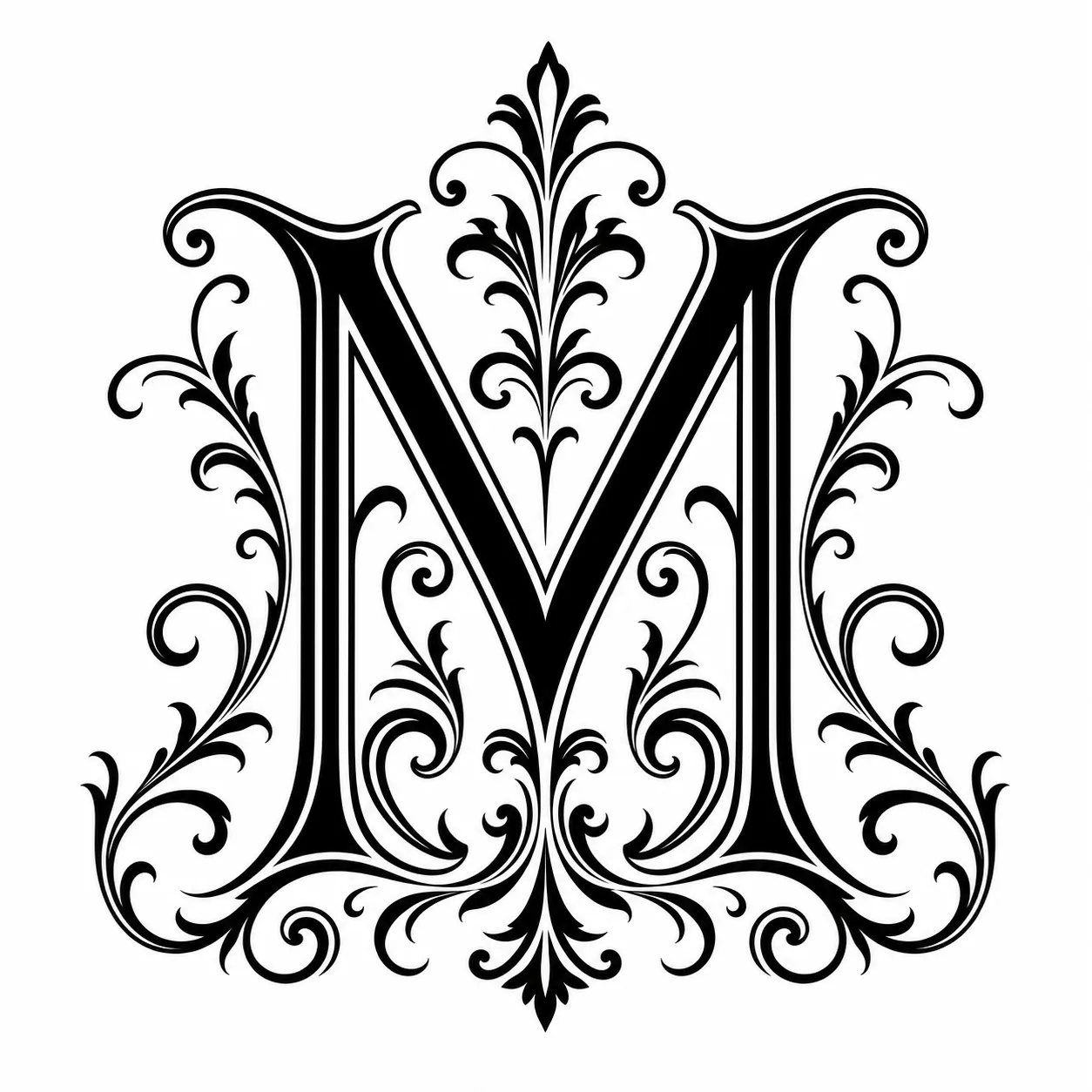
The lettering itself is only half the job. Ornamentation means everything that happens around the letters: swashes (the sweeping tails on large initial capitals), ligatures (two letters that flow into each other), flourishes above or below the word, floral vines threading through the lines, and decorative frames that enclose a name. If you just tell your artist "lettering," you often get plain letters. If you say "blackletter with swash capitals and a fine vine line underneath," you get exactly the picture forming in your head. That vocabulary is missing from almost every template list out there, yet it decides the whole design.
Which lettering style handles how much ornamentation?
Calligraphy and script fonts are made for ornamentation, because their sweeping base shapes carry flourishes and swashes forward naturally. Old English and blackletter already pack so much detail into the letters themselves that extra ornaments quickly look overloaded; here a discreet frame is enough. Fine-line serif fonts take delicate floral vines well, as long as the lines don't sit too close together. Serifs bring small terminal strokes, while sans-serif skips them and reads cooler, which is why pure sans fonts with a lot of flourish often look off.
Placement and size: how much room does ornamentation need?
In practice, people most often underestimate the ornamentation and choose too little surface. A plain name works on the wrist at 5 to 6 cm; as soon as swashes and a vine line come in, you'll want more like 8 to 10 cm so the fine lines don't run together. The inner forearm, collarbone, and nape offer the slim, elongated shape that lettering loves. On pain, roughly: the upper arm and forearm are moderate, the collarbone and ribs pull noticeably more because of the nearness to bone, and fingers are short but intense. Delicate flourishes under 3 cm are tricky, since thin lines run together over the years.
Do fine flourishes hold up? Aftercare and fading
The very delicate ornamental lines that make ornamentation beautiful are the ones that fade fastest. Fine-line vines and hair-thin swashes lose contrast after a few years, especially on spots with a lot of sun or friction. Keep the healing phase moist with a thin layer of wound-and-healing ointment, shield fresh lines from direct sun for the first few weeks, and expect that very fine ornamentation may need a touch-up after four to six years. If you'd rather avoid that, choose slightly bolder lines for the ornamental elements.
What does tattoo lettering with ornamentation cost in Germany?
A small, plain piece of lettering sits at the minimum of about 80 to 120 euros in many German studios. Add swashes, vines, or a decorative frame and you're billed by the hour instead (usually 100 to 150 euros per hour), and an elaborately ornamented piece of lettering on the forearm can take two to three hours. Since every vine is drawn individually, a preview is worth it: with the AI designer, you generate your name plus ornamentation in different styles, refine the layout, and bring the template into the studio instead of improvising on the spot.
FAQ
What are some ideas for a lettering tattoo?
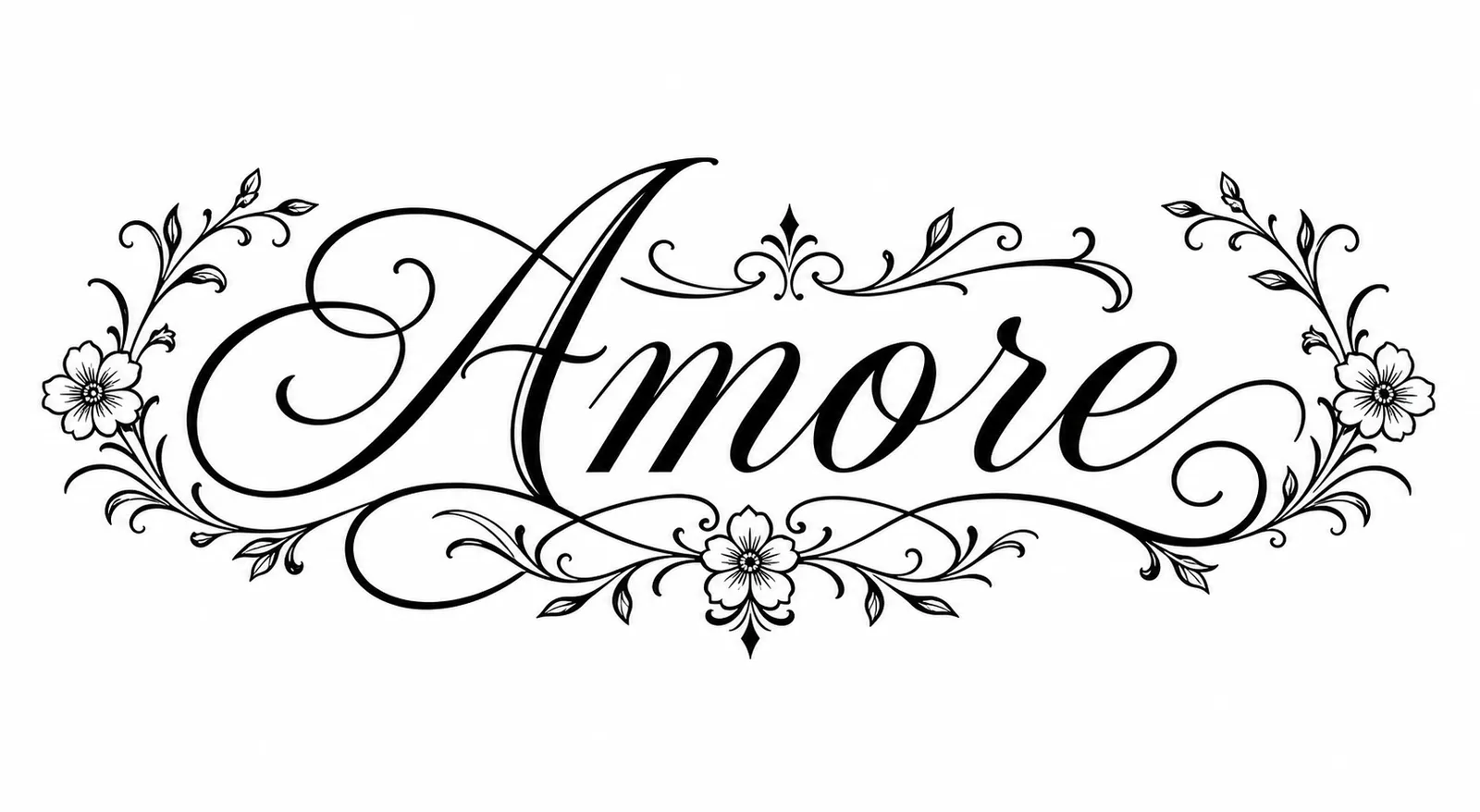
Popular choices are names, birth dates, short life mottos, or a single word like 'Amore.' The whole thing is ornamented with swash initials, a fine vine line underneath, floral elements, or a slim decorative frame. Calligraphy and fine line combine most freely.
Which font suits tattoos?
For a lot of ornamentation, script and calligraphy fonts work well, because their sweeps carry flourishes forward naturally. Old English and blackletter read bold and need little extra ornament. Fine-line serifs suit delicate vines, but shouldn't be tattooed too small.
What does lettering cost at the tattoo artist?
A plain small piece of lettering often starts at the studio minimum of around 80 to 120 euros. With ornamentation, it's billed by the hour, usually 100 to 150 euros per hour. An elaborately ornamented piece of lettering on the forearm therefore quickly costs 250 to 400 euros.
Which tattoo stands for never giving up?
As lettering, many people choose words like 'Never give up,' 'Stay strong,' or a personal motto. The message is reinforced with a symbol as ornamentation, like a semicolon ligature, a small mountain silhouette, or an arrow underline.
Do fine ornaments blur over time?
Yes, very thin flourishes and fine-line vines lose crispness after a few years, especially with sun and friction. Slightly bolder lines, a size of at least 8 cm, and consistent sun protection keep the ornamentation clean longer. A touch-up after four to six years is normal.