Water Tattoos Explained
Water tattoos are usually transfer tattoos that you just press onto your skin with a damp sponge and peel off gently after a few seconds. The name often confuses people, since it can also mean actual water designs like waves or koi. Here I'll explain both, how long they last, and what really matters when you apply one.
You might also like:temporary tattoos at a glance · how tattoo stickers work · wave tattoos as a water design
Templates & examples
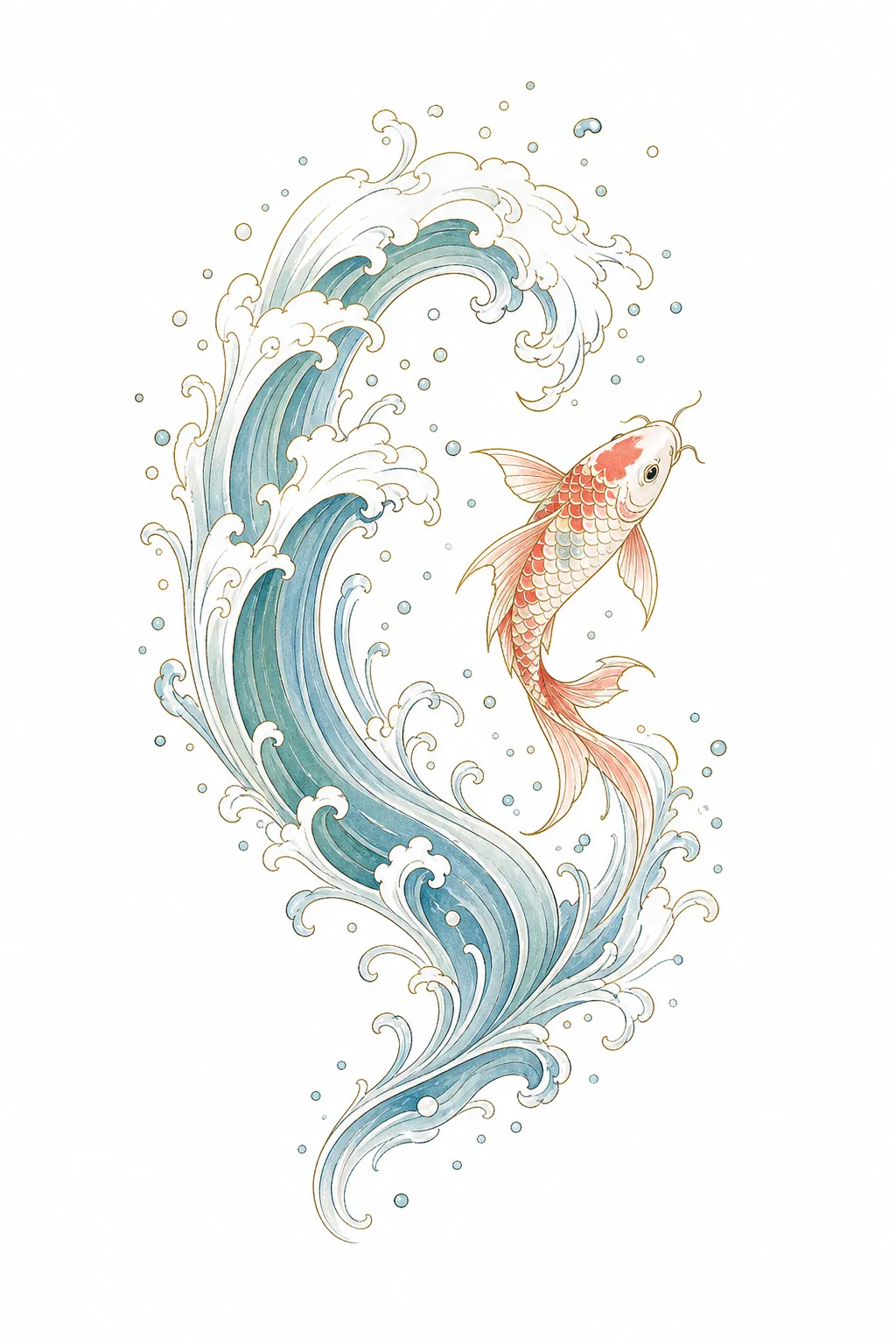
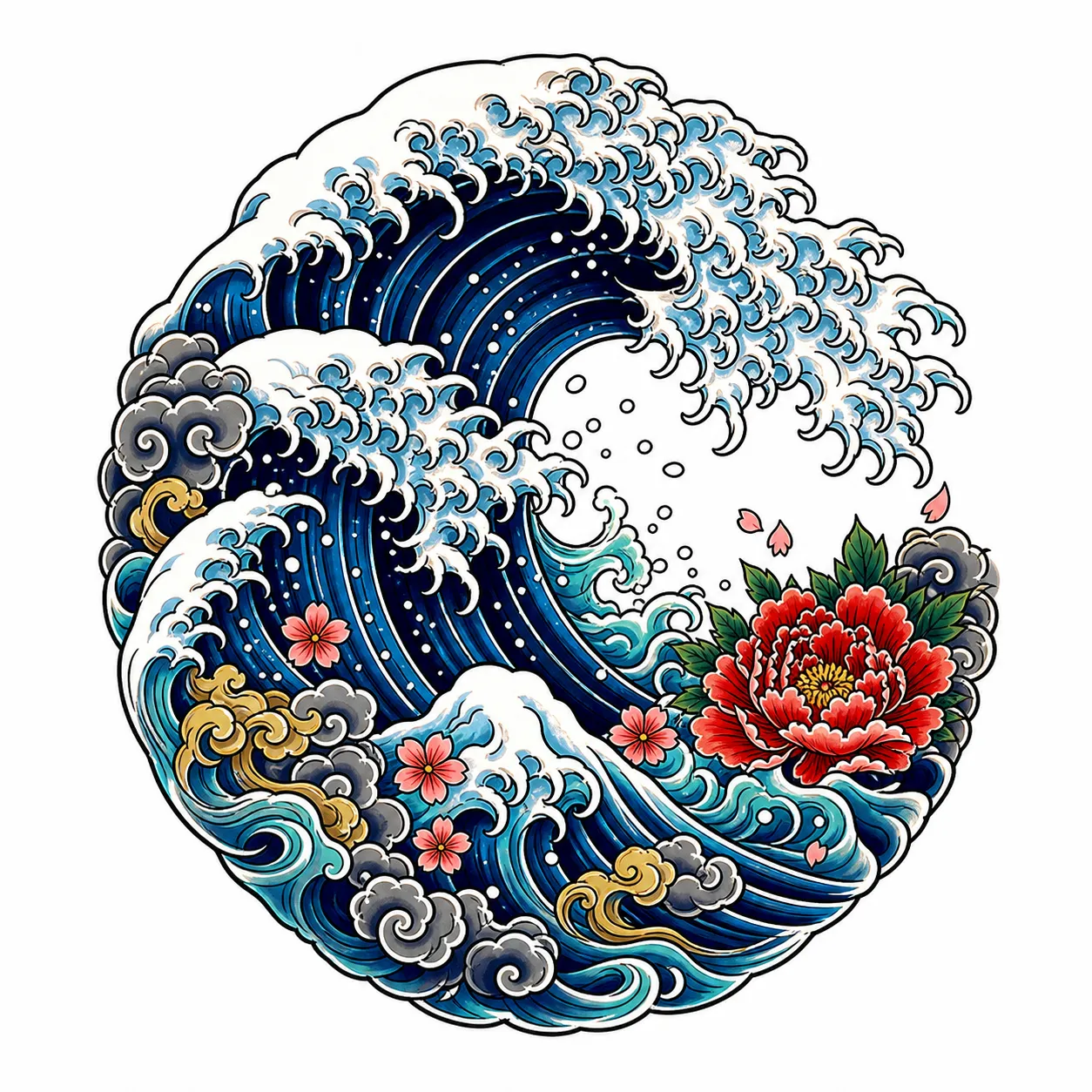
Create your own design
Describe your idea, pick a style – the AI creates one-of-a-kind tattoo designs in seconds.
Create your own tattoo
What water tattoos actually mean
When people search for water tattoos, they almost always mean one of two things. Most often it's transfer tattoos: printed films that you move onto your skin with water and that vanish on their own after a few days. But some people think of designs around the element of water, like a wave on the wrist or a koi. This guide covers both, with the focus on the stick-on version.
How do water transfer tattoos work?
The technique is surprisingly simple. The printed film goes on the skin design side down, then you press a wet sponge firmly on it for 20 to 30 seconds. The water dissolves the backing layer, and the design stays behind. What matters is dry, oil-free skin beforehand, since cream or tanning oil makes the edges peel off fast. After peeling, let it dry briefly and don't rub it right away.
How long do water tattoos last?
A stuck-on water tattoo lasts two to five days depending on quality. On spots with a lot of friction, so the side of the hand, fingers, or inner wrist, it comes off sooner than on the forearm or calf. Frequent showering, swimming, and soap shorten the life noticeably. If you want it to last longer, reach for jagua or henna versions, or go straight for a real design.
Water designs: waves, koi, and the sea
On the design side, water stands for calm, change, and depth. Popular options are fine waves in fine line style, a Japanese koi in a whirlpool, or a small breaking wave, often in blue-gray, sometimes in bold watercolor. Designs like these look good as both a real and a temporary tattoo.
Real tattoos and water: healing and bathing
And the freshly done real tattoo? It barely tolerates water for the first two weeks. A quick shower is fine, but baths, saunas, and pools are not, since the softened wound loses ink and can get infected. In practice, summer tattoos often come out patchy because someone got in the pool too soon. Two to three weeks of patience, then the design can go back in the water.
FAQ
What are water tattoos called?
Usually transfer tattoos or water transfer tattoos. The film is moved over with a damp sponge, hence the name. In stores they also go by stick-on tattoos or temporary tattoos.
Can I tattoo with water?
A permanent tattoo doesn't come from water, since that needs a needle and ink under the skin. Water only transfers the pre-printed film of a stick-on tattoo onto the surface of the skin.
How long does a water tattoo last?
Two to five days, depending on the spot and aftercare. Little friction and infrequent scrubbing make it last longer, and on the fingers it lasts the shortest.
How long does a tattoo last in water?
A stuck-on design survives a quick swim but comes off fast with longer bathing. A freshly done real tattoo should stay out of the pool or bathtub entirely for about two weeks.
How do I apply a water tattoo correctly?
Clean and dry the skin, peel off the protective film, and lay the design face down. Press a wet sponge on it for 20 to 30 seconds, then carefully peel off the paper and let it dry.