Wave Tattoos: Meaning and Designs
Wave tattoos capture the rhythm of the sea: sometimes a fine line on the wrist, sometimes a big breaker rolling across the whole forearm. In this guide I'll walk through the meaning, the designs, the placements that work, plus pain and longevity, so your wave tattoo doesn't just look good on day one.
You might also like:more water tattoos as a design · compass needle tattoo as a maritime addition · tattoos and their meanings at a glance
Templates & examples
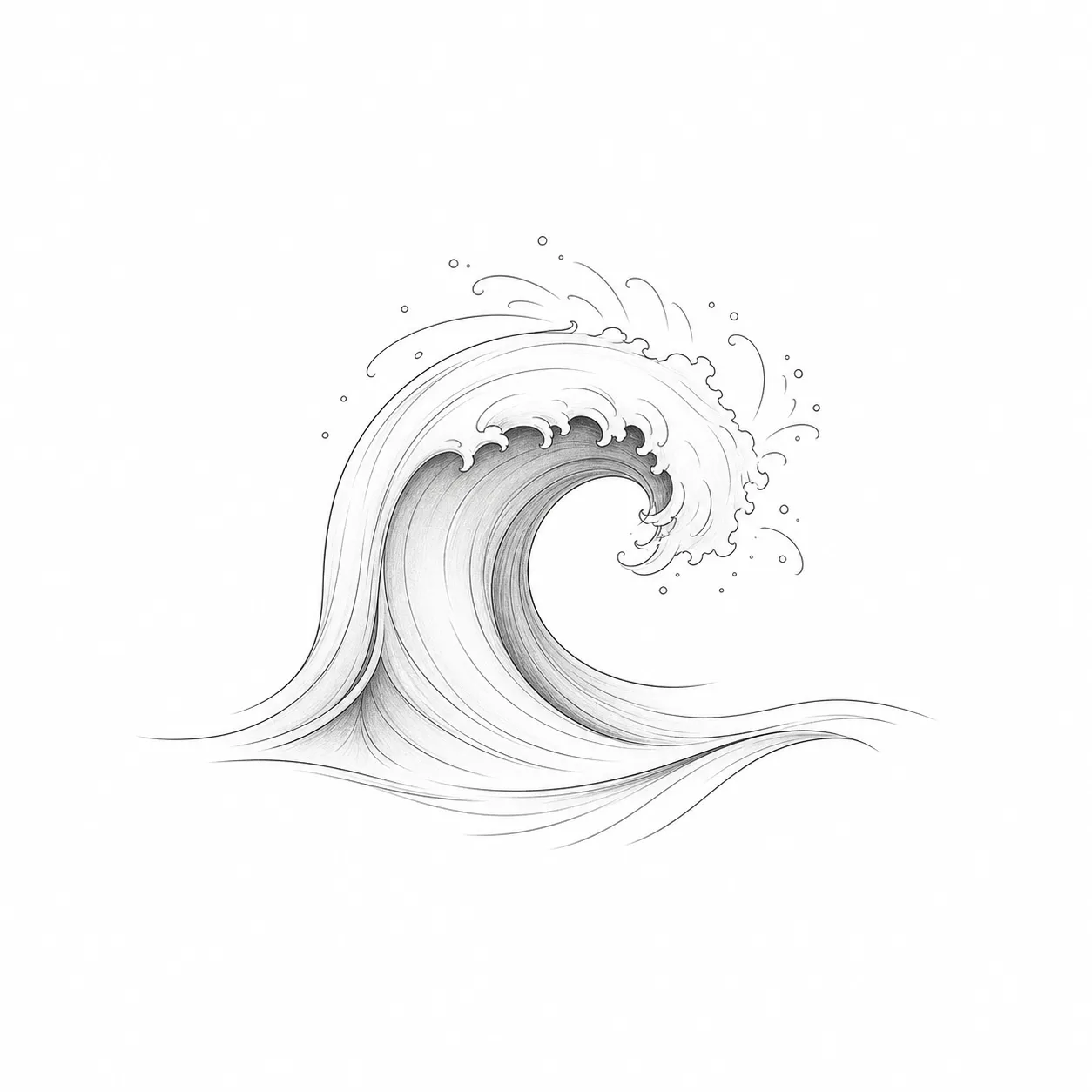
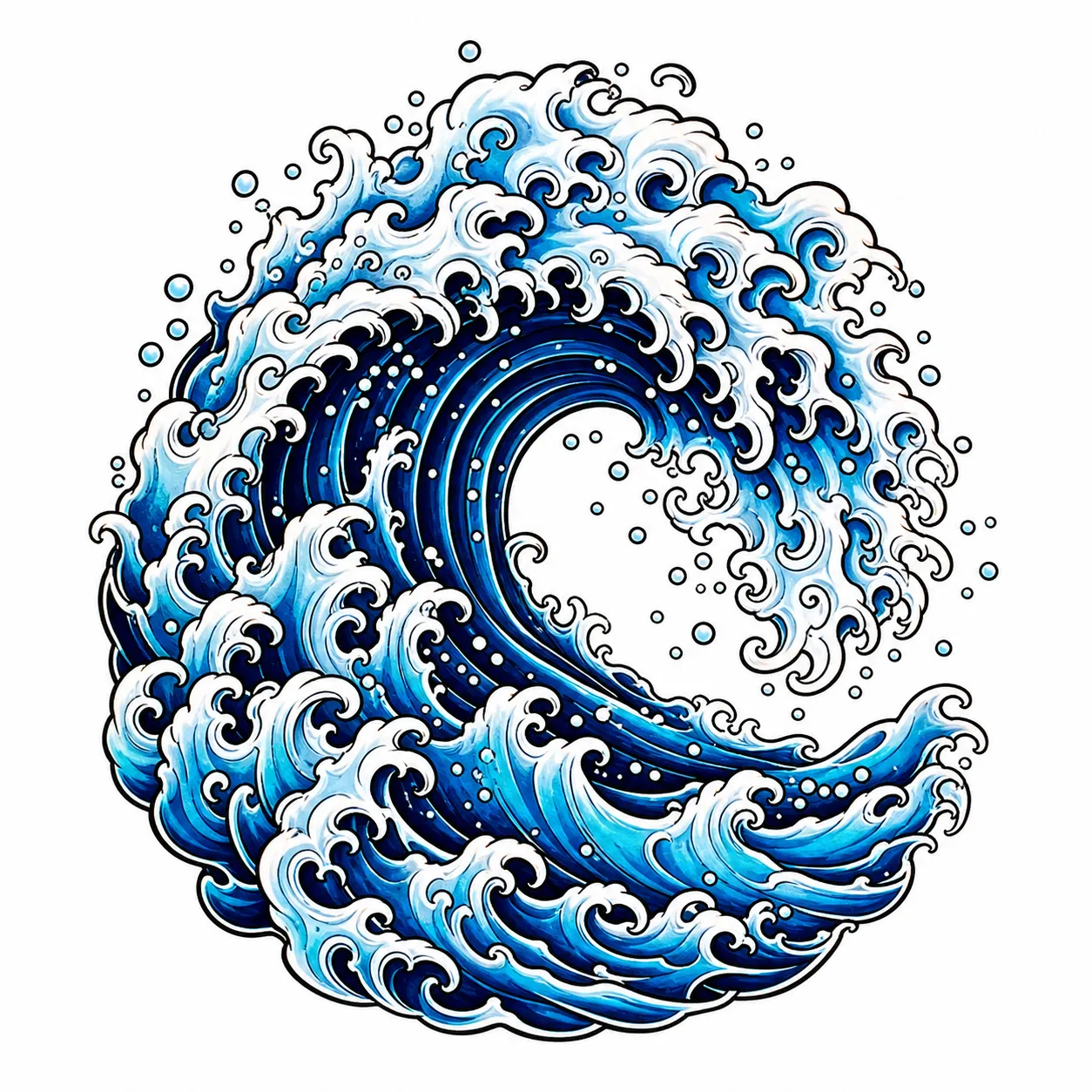
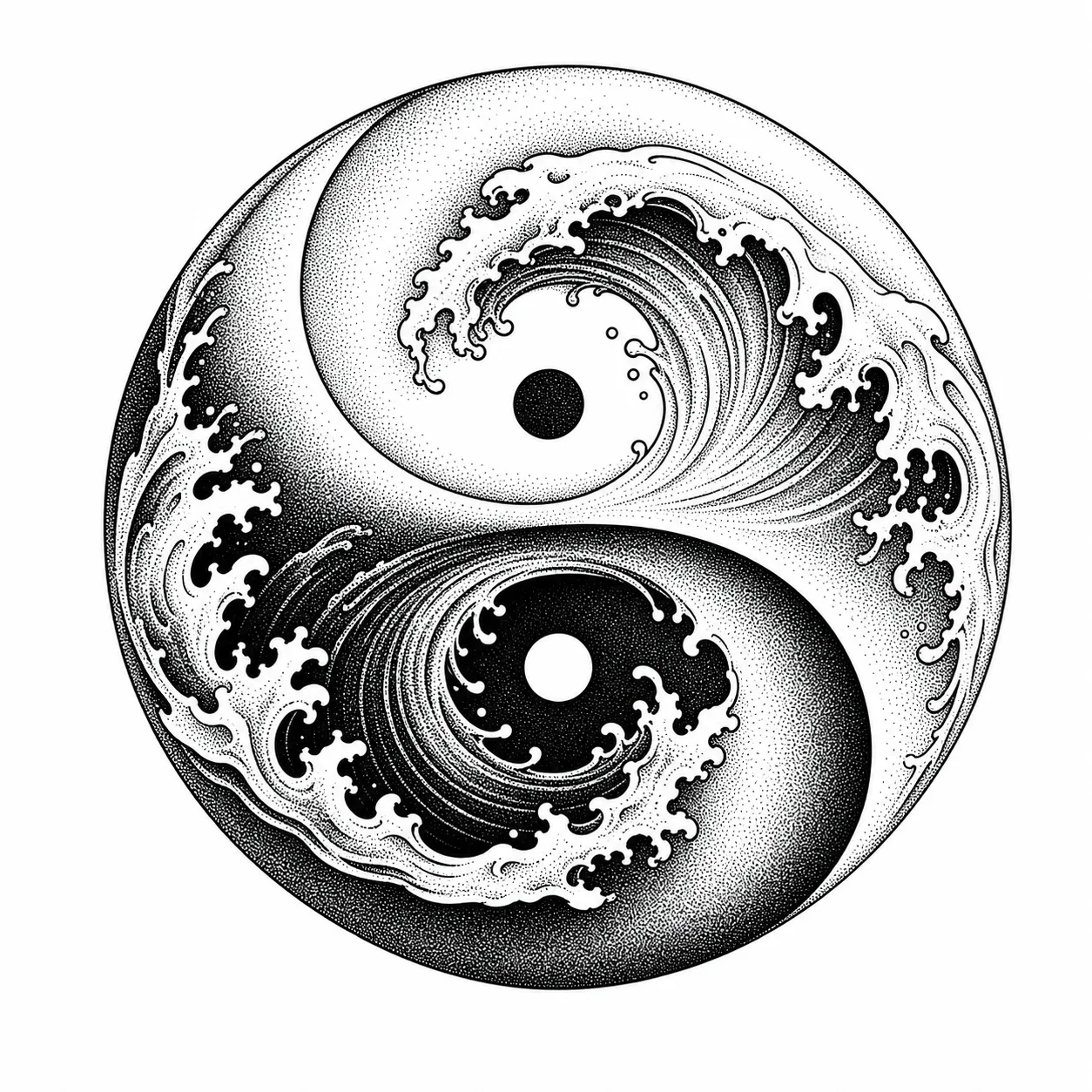
Create your own design
Describe your idea, pick a style – the AI creates one-of-a-kind tattoo designs in seconds.
Create your own tattoo
The meaning behind wave tattoos
Hardly any design is as closely tied to the sea as the wave. It stands for movement, for the ups and downs of emotion, and for the ability to settle back into calm after a storm. Many people get a wave after coming through a hard time, as a reminder that every swell eventually breaks and rolls out. In practice, most start with a single, calm line and only add a whole breaker months later.
Which style suits a wave tattoo?
The fine line is the classic: a single sweep suggests water and fits almost anywhere. If you want more area, go for the Japanese-inspired breaker with foam crests in the style of Hokusai's famous wave. In between sit watercolor waves with washed-out blues and blackwork that leaves the spray standing in deep black. Which style suits your wave tattoo depends mostly on how much detail your chosen spot can carry over the years.
Popular designs: from fine line to Hokusai
Waves rarely come alone. They're often combined with a compass, an anchor, a small sun on the horizon, or mountains, so a whole landscape comes together in little space. A date or a short piece of lettering can be worked into the crest of the wave too.
Where does a wave tattoo sit best?
For a first wave tattoo, the wrist, forearm, ankle, or behind the ear all work. Bigger breakers look best on the upper arm, calf, or ribs, where there's enough room for foam and shading.
Keeping an eye on pain and longevity
On spots close to bone like the ankle, ribs, or wrist, the sting is noticeably stronger than on the fleshy forearm. Fine lines look great fresh but blur more easily over the years, especially on hands and feet. If you want to enjoy the wave for a long time, don't set the lines too thin and protect the tattoo from the sun consistently. And avoid salt water and chlorine for the first few weeks, as ironic as that sounds for a sea design.
FAQ
What does a wave tattoo stand for?
The wave symbolizes movement, change, and emotional resilience. It's a reminder that highs and lows come and go. For many it also stands for a love of the sea, or a fresh start after a hard phase.
Which tattoo stands for never giving up?
For that, many reach for the semicolon, the anchor, or a wave that keeps building back up. A breaker fits well, since it shows you come back after every setback. Paired with a short piece of lettering, the message gets even clearer.
Where should you get a wave tattoo?
Popular spots are the wrist, forearm, ankle, and behind the ear for small designs. For a bigger breaker, the upper arm, calf, or ribs work well. Decide based on the size of the design and how visible it should be.
Which symbols are not allowed as tattoos?
In Germany, unconstitutional symbols like swastikas or SS runes are banned, as are certain symbols of prohibited organizations. A wave, of course, is not among them. When in doubt, your studio can clarify whether a design is legally fine.
Does a wave tattoo suit men and women?
Yes, the wave is gender-neutral. Women often choose the fine, minimalist line, while bigger breakers more often land on men's arms. In the end it comes down to your taste, and the design itself is open to everyone.