Travel Tattoo: Designs & Meaning
A travel tattoo captures wanderlust, places, and the stages that shaped you, from a compass to a world map to coordinates. It turns your skin into a logbook. This page walks you through the most common designs, their meaning, and tips on placement, pain, and aftercare before your next flight.
You might also like:compass needle tattoo as a wanderlust classic · more tattoo designs to browse · tattoos and their meanings at a glance
Templates & examples


Create your own design
Describe your idea, pick a style – the AI creates one-of-a-kind tattoo designs in seconds.
Create your own tattoo
What a travel tattoo says
Most travel designs stand for a specific moment: the first solo trip, a move to the coast, the route of a road trip. A compass shows direction and the way home; a "wanderlust" line the simple urge to set off. Coordinates, meanwhile, anchor one exact place on your skin without outsiders being able to read it, which for many people is the whole appeal.
The most popular travel tattoo designs
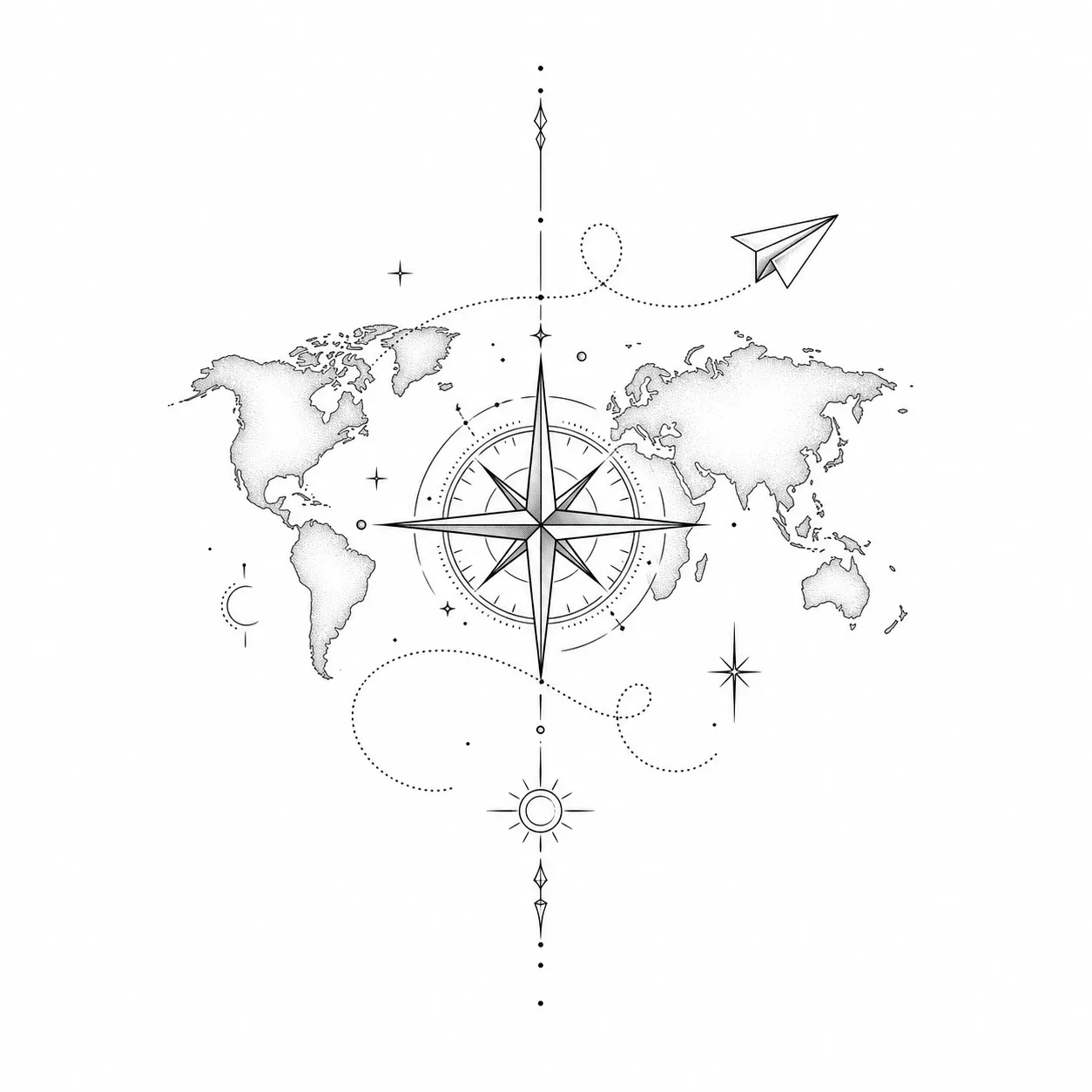
Classics are the compass, world map, plane or paper airplane, mountains, waves, and GPS coordinates. The dashed line from A to B, say between two cities, is popular too. If you want it subtle, go for a fine paper-airplane symbol on the wrist; if you have the space, combine a map and compass into a larger piece on the upper arm. Lettering like coordinates in words or a short quote works on its own or alongside a picture.
Which placement suits a travel tattoo?
The forearm and wrist are the favorites, because you keep the design in view yourself, handy as a little everyday reminder. A world map or mountain panorama, on the other hand, needs room and looks best on the upper arm, calf, or shoulder blade. Fine lines on fingers or ankles tend to fade faster, because there's a lot of friction there.
Does a travel design hurt?
That comes down almost entirely to the spot, not the design. Fleshy areas like the upper arm are very manageable, while thin skin over bone, ribs, ankle, collarbone, stings noticeably more.
After getting inked: tattoo first, then travel
In practice, the most common mistake is getting inked right before a beach vacation. A fresh tattoo shouldn't go in direct sun or into sea or pool water for two to three weeks, or the color and healing suffer. So plan the tattoo for four to six weeks before the trip instead. If you want to test the design first, a temporary version is a risk-free trial run before the real thing.
FAQ
What is a travel tattoo?
A travel tattoo is a design centered on travel and wanderlust: a compass, world map, plane, mountains, or coordinates of a special place. It usually captures a specific trip or a phase of life spent on the move.
Is it worth traveling for a tattoo?
For a specific artist or a traditional style done on location, the journey can be worth it. But check for verifiable hygiene and leave enough time for healing, so you're not straight into the water or the blazing sun right afterward.
How long after a tattoo should you wait before vacation?
You should avoid sun, salt water, and pool water for two to three weeks, because the tattoo heals as an open wound during that time. For a beach or swimming vacation, leave four to six weeks of buffer, so the skin is fully closed.
Which countries are especially tattoo-friendly?
Across much of Europe, the US, Canada, Brazil, and Japan's younger scene, tattoos are everyday. In some conservative or religiously shaped regions, visible designs are seen as inappropriate; there, long-sleeved clothing helps at sacred sites.
Which design suits a travel tattoo?
Popular ones are a compass, world map, paper airplane, mountains, and GPS coordinates of a favorite place. Pick something tied to a real memory; it wears better long-term than a pure trend design.