Spiritual Tattoos: Symbols & Meaning
Spiritual tattoos tie a design to an inner stance like letting go, protection, or grounding, turning a symbol into a daily anchor. This page sorts the best-known symbols by meaning and shows which design really suits your story. Along the way, you'll get notes on placement, size, and style.
You might also like:the lotus flower tattoo and its meaning · symbols of inner strength as a tattoo · tattoos and their meanings at a glance
Templates & examples
Create your own design
Describe your idea, pick a style – the AI creates one-of-a-kind tattoo designs in seconds.
Create your own tattoo
What makes a tattoo spiritual
The term is broader than a lot of people think. A spiritual tattoo doesn't have to belong to any religion; it holds an idea that gives you something to hold onto: a turning point, a conviction, a promise to yourself. Some people choose a mandala after a hard time, others a small unalome as a reminder that the path rarely runs straight. What counts is the tie to your own story, not the size of the design.
The key symbols and their meaning
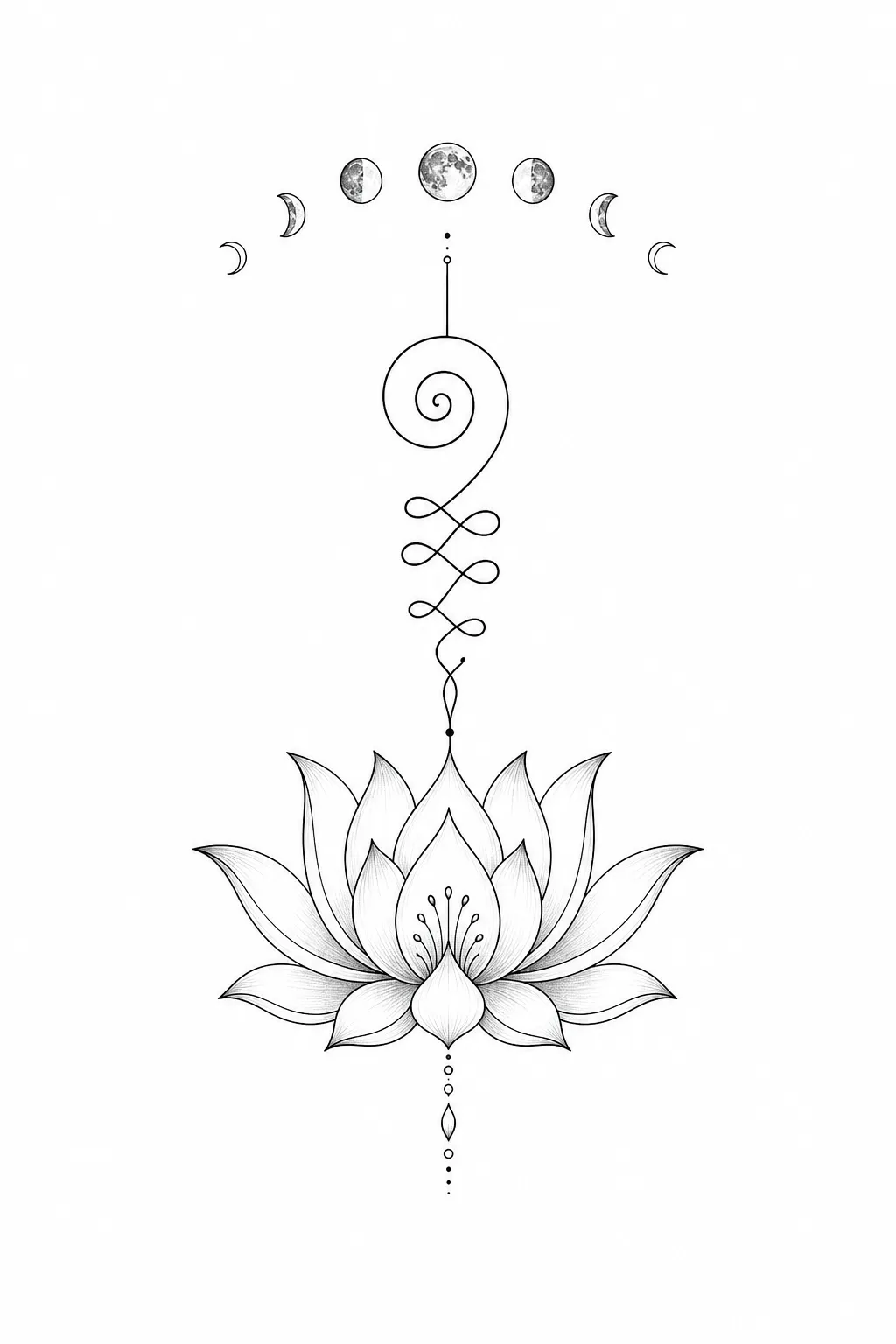
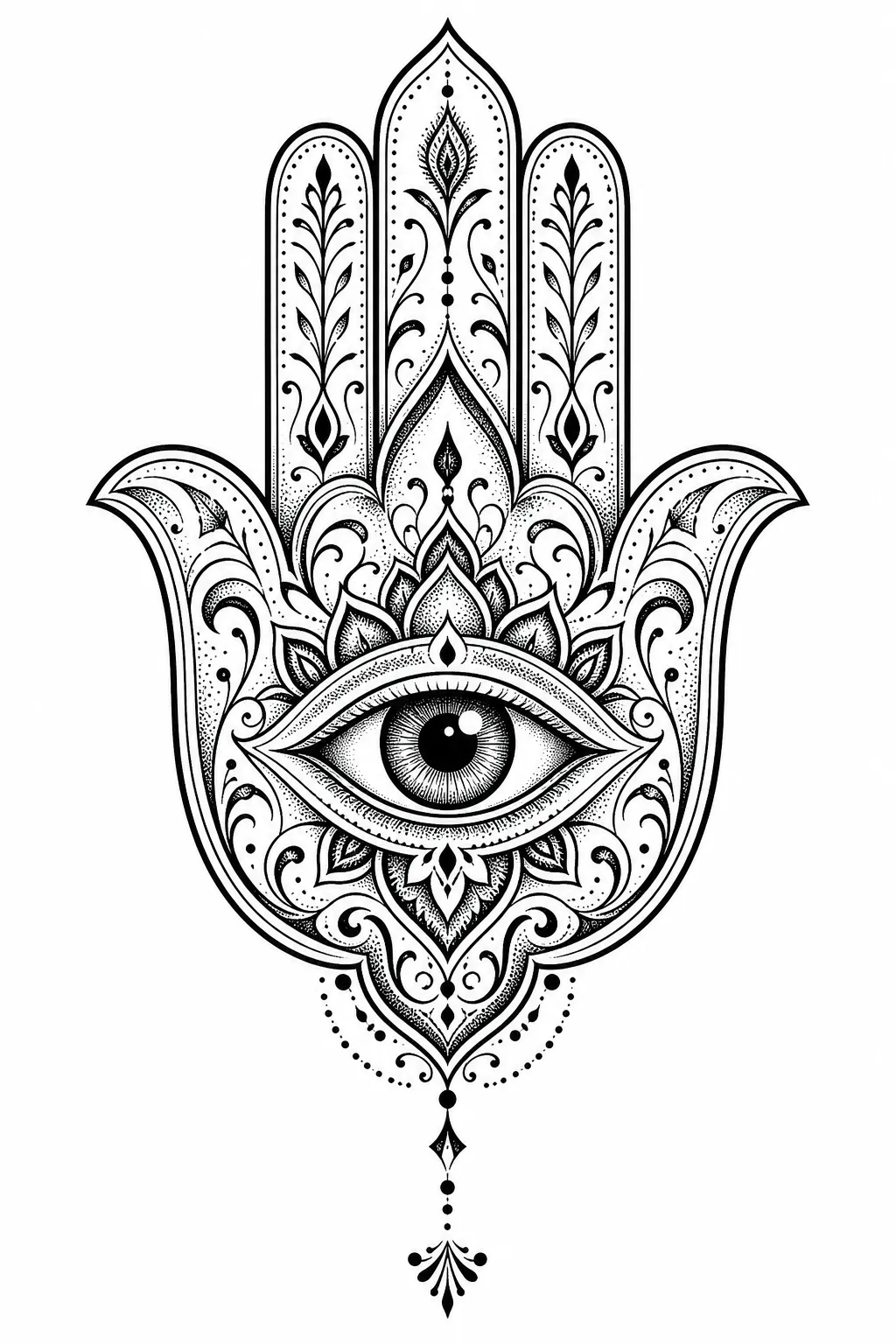
A few designs come up again and again, and it's worth knowing their origins before they go under your skin. The lotus flower stands for purity and growth out of the mud. The unalome traces the path to inner calm, the twists are detours, the straight stroke is arriving. The Hamsa hand is seen as protection against negative energy, the Om as the primal sound in Hinduism and Buddhism. The tree of life connects roots and crown, and moon phases speak of change and cycles. In practice, the lotus, moon phases, and fine mandalas show up most often; they age well and can be extended later.
Which style suits a spiritual tattoo?
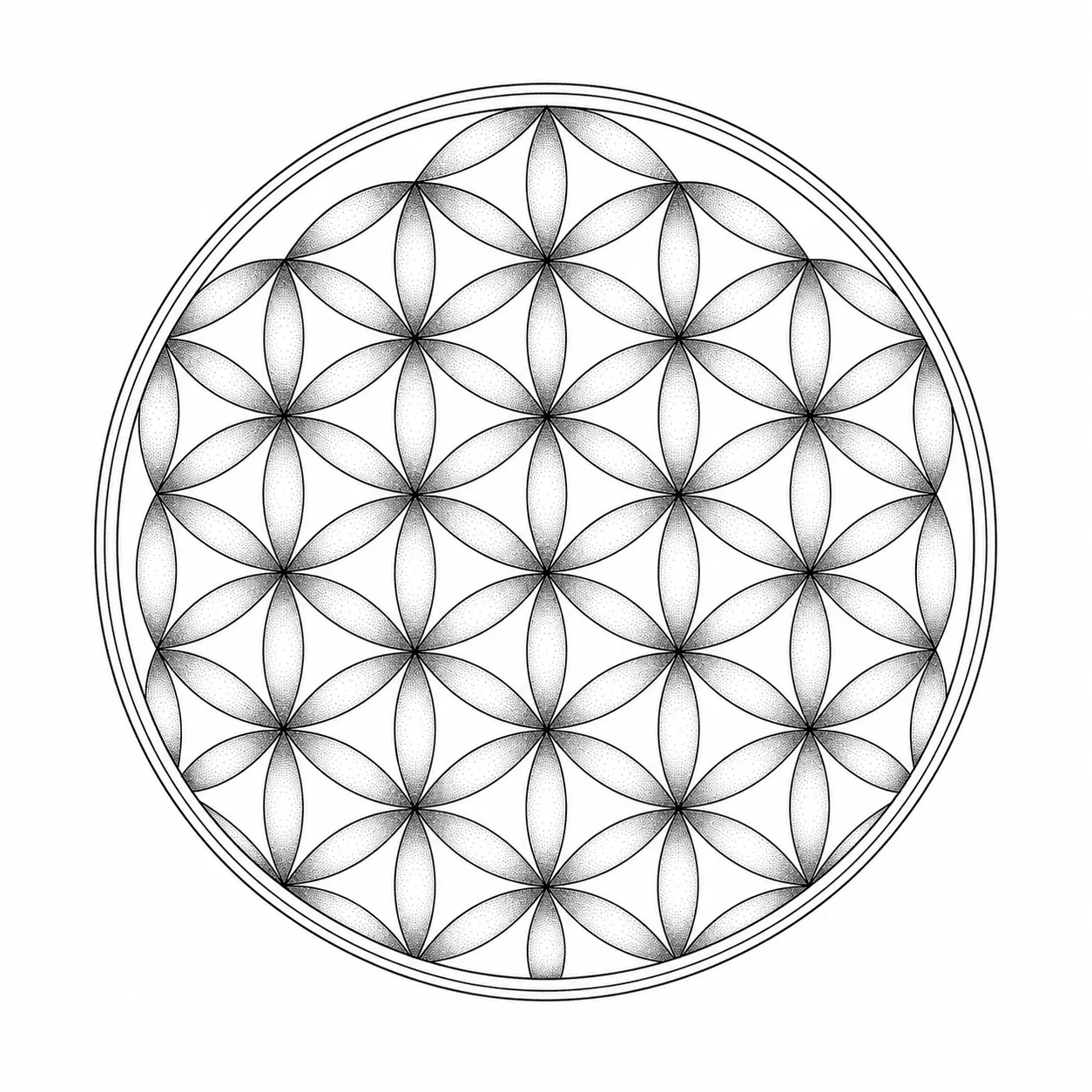
It depends on the symbol. Fine lines suit restraint and pair well with the unalome, moon phases, or delicate lettering. Dotwork with its stippled shading feels almost meditative and brings mandalas and geometric patterns to life. If you like contrast, go for blackwork with rich blocks. Watercolor effects loosen the strict lines and give spiritual designs something dreamlike.
Where on the body?
Popular spots are the ones you can see yourself: the forearm, wrist, and inner upper arm. If you want to keep your design more private, go for the back, nape, or collarbone. Small, fine designs quickly hit their limits on the ribs or ankle, because thin lines there can blur over the years.
Pain, aftercare, and longevity
Delicate spiritual tattoos are usually done quickly, but fine lines forgive little. On thin-skinned spots like the wrist or ribs, the pain is more noticeable than on the upper arm. For longevity, the rule is: the finer the line, the more important sun protection and good aftercare are. A design with a bit more line weight stays clearly readable over the years better than ultra-thin hairlines.
FAQ
What is a spiritual tattoo?
A spiritual tattoo is a design that makes an inner conviction, a belief, or a personal turning point visible. It can be a religious sign, but often it's simply a symbol like the lotus, unalome, or moon phase that carries a deeper meaning for the wearer.
Which spiritual symbols are especially popular?
Common picks are the lotus flower, unalome, Hamsa hand, Om, mandala, tree of life, and moon phases. Each stands for its own theme, from protection to growth to change. The best fit is the symbol whose meaning matches your own story.
Which tattoo stands for inner strength?
For inner strength, many people go with the lotus, the tree of life, or the unalome. A mountain silhouette or a semicolon are worn in this sense too. What matters is the personal tie, a symbol is only as strong as the story behind it.
Which tattoo stands for "never give up"?
For that, there's the semicolon (the story goes on), the anchor as a symbol of grounding, the phoenix for a fresh start, and the arrow that's drawn back before it shoots forward. A short piece of lettering like "never give up" reads the most directly.
Where's the best place to get a spiritual tattoo?
That depends on how visible you want it. The forearm and wrist are easy to show, while the back, nape, and collarbone stay more private. For fine lines, flat areas like the upper arm or forearm are calmer than the ribs or ankle.