Believe-Yourself Tattoo: Ideas
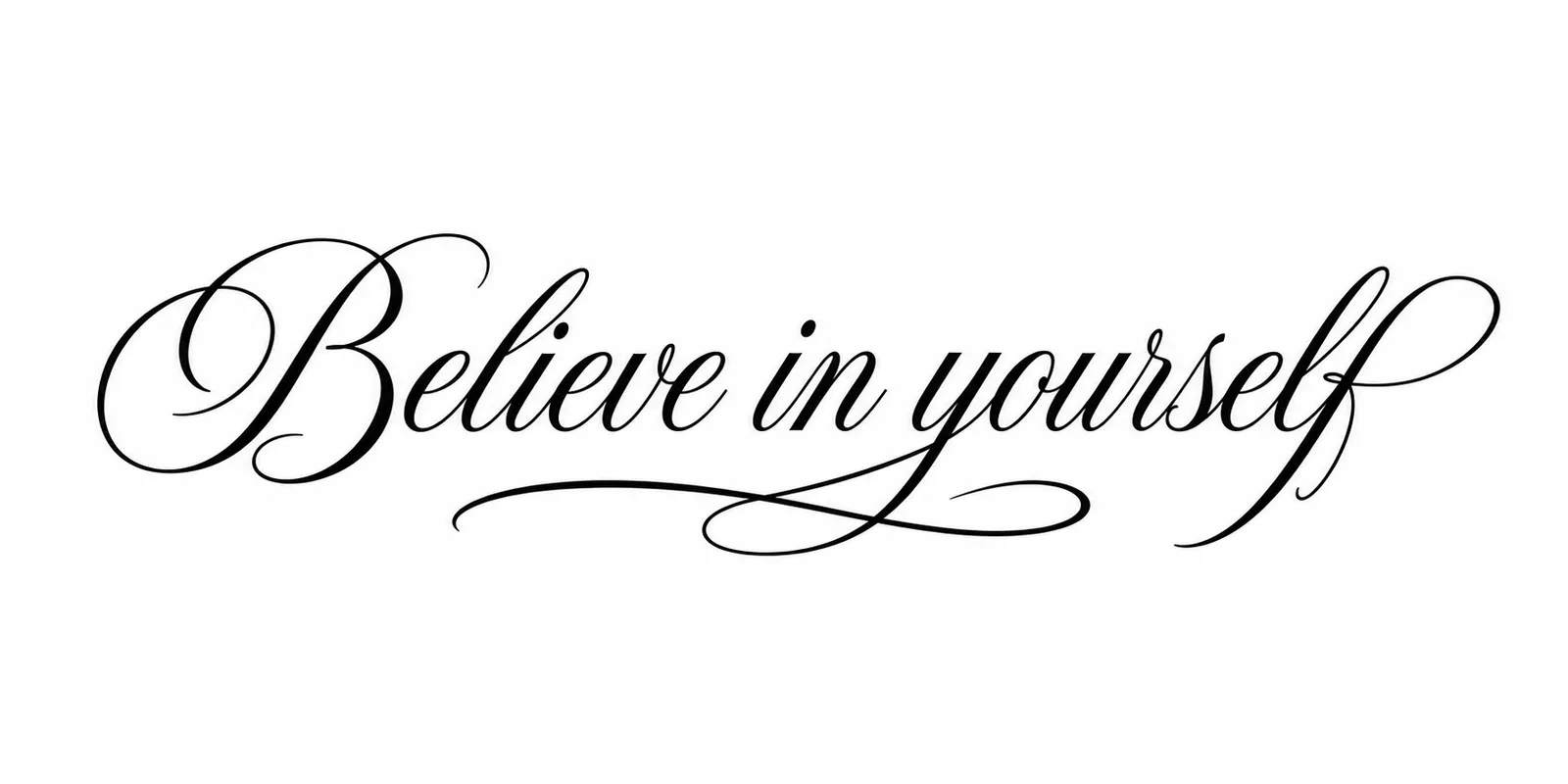
A believe-yourself tattoo puts a short pep-talk right where you can see it and reminds you of your own strength in shaky moments. This is about more than pretty letters: font, language, and placement decide whether the phrase still reads clearly years down the line. I'll show you the lettering styles that fit, honest placements with a pain rundown, and what fine lines can take over time.
You might also like:Placing a script tattoo on the wrist · Fine-line tattoo for delicate letters · Find the right words for your tattoo
Templates & examples

Create your own design
Describe your idea, pick a style – the AI creates one-of-a-kind tattoo designs in seconds.
Create your own tattoo
What a believe-yourself tattoo says
The phrase sounds simple, but most people get it after a stretch where they barely trusted themselves. A believe-yourself tattoo is a statement to your own self: I've got this, even when nobody else believes it right now. Some tie it to self-love, others read it as a quiet promise to hold on after illness, a breakup, or a fresh start.
Which font suits a believe-yourself tattoo?
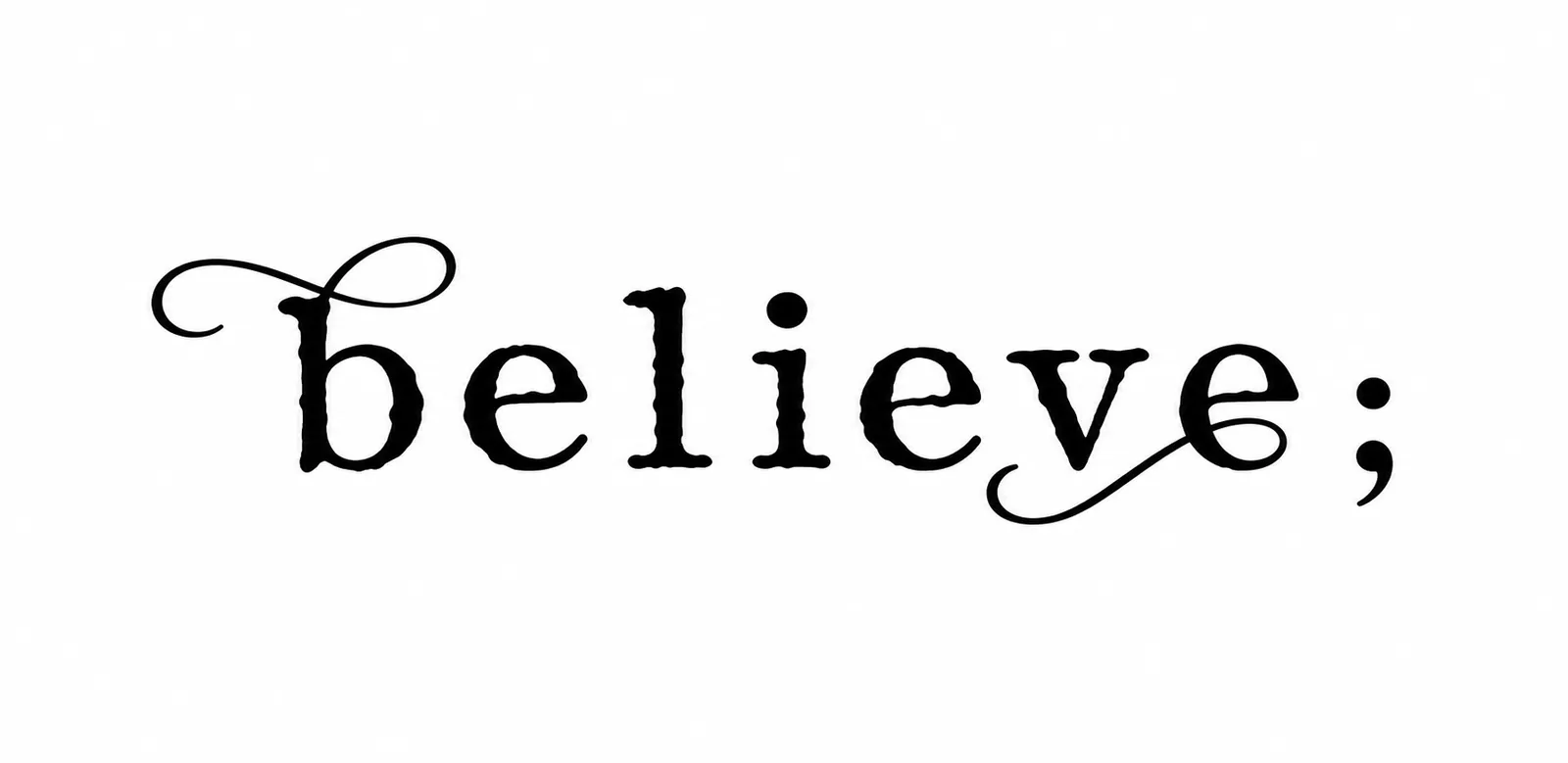
The font makes almost the whole effect here. Delicate fine-line handwriting feels personal, almost like it's from your own journal; a clean serif reads calmer and stays legible even small. In practice, ornate calligraphy looks great on the stencil but closes up fast after a few years, as the hair-thin lines bleed into each other. If you want it subtle, shorten it to "believe" or "believe in you" and gain room for cleaner letters.
Where should the script go?
A script needs a straight, elongated surface. The wrist carries short words (about 4–6 cm), the inner forearm swallows whole sentences at 8–12 cm, and below the collarbone or on the rib a fine line reads especially intimate. The longer the sentence, the bigger it has to get, or you cram twelve letters into three centimeters and lose them once it heals.
How much does a script hurt?
Short and honest: it comes down to the bone. Inner forearm and upper arm are easy to handle, and the wrist only stings at the narrow spot. Over the ribs, collarbone, or on the foot it gets much more uncomfortable, since the needle sits almost right over bone. But a single-line phrase is usually done in 20 to 40 minutes, so it's manageable.
Caring for fine lines and keeping them legible
Fine lettering is the most delicate thing you can get tattooed. For the first two weeks: keep it clean, don't scratch, no tanning bed and no harsh sun — UV bleaches thin lines fastest. Expect a hairline script to need a refresh after five to eight years. In Germany a small script usually sits at the studio minimum, often around €80 to €120; for lettering that stays legible long-term, a lettering-experienced artist is worth it.
FAQ
Which tattoo stands for self-love?
Short phrases like "believe in yourself," "love yourself," or a simple heart are classic self-love designs. The semicolon and a small lotus flower are popular too. What matters is that the phrase rings true for you personally, not that it's on trend.
Which tattoo stands for never give up?
"Believe in yourself" is often chosen for exactly this, along with "never give up," an anchor, or an arrow that only points forward. A mountain peak or a dandelion carries the message too. The phrase hits hardest when it matches your own story.
Which symbols can't be tattooed?
In Germany, anti-constitutional symbols like the swastika, SS runes, or banned organization emblems are criminal offenses. Reputable studios turn such designs down on principle. A pep-talk script is of course not affected.
What does the tattoo 'trust myself' mean?
"Trust myself" means just that — trusting yourself — and it's the first-person take on "believe in yourself." Instead of general encouragement, it stresses the choice to listen to your own gut. The two phrases sit very close in meaning.
Get it in English or German?
Both work: "believe in yourself" is catchy and readable internationally, while "Glaub an dich" feels more direct and personal. Double-check the spelling before your appointment, because a typo stays forever. With German umlauts, be sure the dots are set cleanly.